
Quick answer
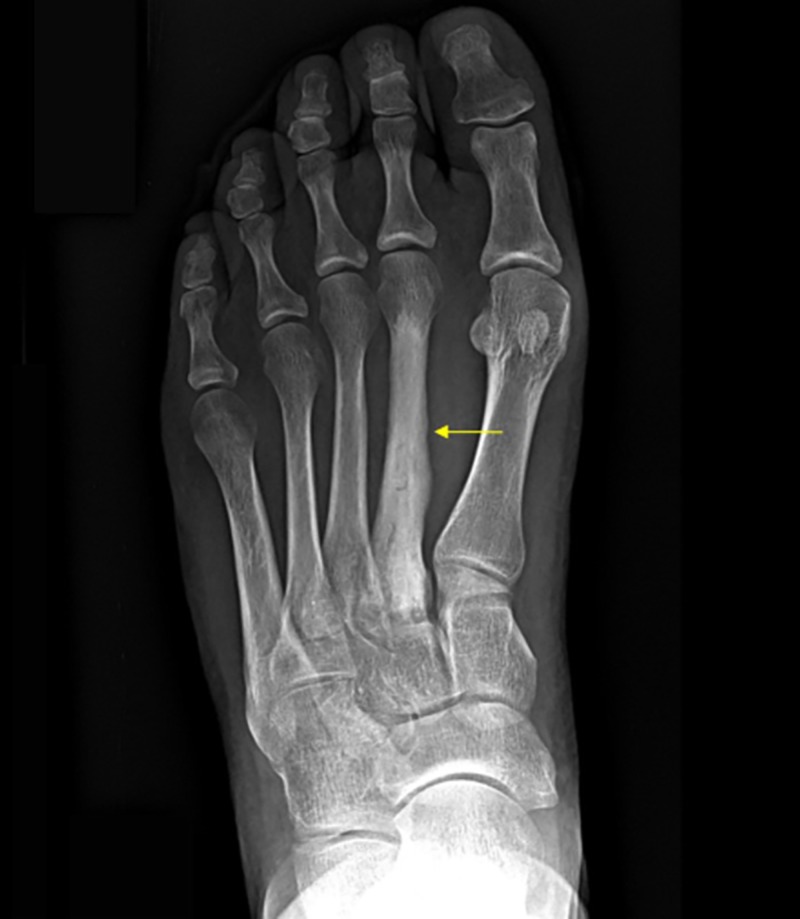
A metatarsal fracture is a break in one of the five long bones that connect the ankle to the toes. Most are caused by a direct blow (dropping something on the foot), a twisting fall, or, in the stress variant, repetitive loading over time. The vast majority heal without surgery in a boot or stiff-soled shoe. Which metatarsal is broken and exactly where the break is located determines how serious it is.
Anatomy: five bones, different risks
| Metatarsal | Notes |
|---|---|
| 1st (big toe side) | Rare to fracture; bears 40% of weight during push-off. When fractured, needs careful management because displacement affects gait. |
| 2nd and 3rd | Most common shaft fractures; usually heal well since the adjacent bones splint them. |
| 4th | Similar to 2nd/3rd; low risk of complication if alignment is maintained. |
| 5th (pinky side) | Most fracture-prone. Has three distinct zones with very different treatment implications (see below). |
The fifth metatarsal is different
The 5th metatarsal deserves special attention because fracture location is everything:
- Zone 1 (base avulsion fracture): The peroneus brevis tendon pulls off a flake of bone at the base during an ankle roll. Very common. Heals reliably with a walking boot in 4–6 weeks.
- Zone 2 (Jones fracture): At the junction of the base and the shaft. Poor blood supply here means high risk of non-union. Often requires surgery in athletes.
- Zone 3 (diaphyseal stress fracture): From repetitive loading in the mid-shaft. Also prone to non-union; high surgical rate.
Zone 1 fractures are the most common and least serious. Zones 2 and 3 are treated very differently and should be evaluated by a foot specialist.
How to recognize one
Classic history: A fall, stumble, or twisting injury; or dropping something heavy on the top of the foot. You’ll hear or feel a snap, followed by immediate pain and difficulty weight-bearing.
Symptoms:
- Sharp pain along the top or side of the midfoot
- Significant swelling and bruising, bruising may spread toward the toes over 24–48 hours
- Tenderness directly over the broken bone
- Difficulty or inability to bear weight
Stress fracture pattern: Gradually worsening pain that begins during activity and eventually persists at rest. No specific trauma event. Common in runners who increased mileage too quickly, military recruits, and dancers.
How it is diagnosed
Physical exam: Point tenderness directly over the shaft of the metatarsal is the key finding. A “piano key test” (pressing down on each toe tip to stress each metatarsal) helps identify which bone is involved.
X-ray: The first-line study. Standard three views (AP, lateral, oblique) will show most acute fractures. The oblique view is essential for the 2nd–4th metatarsals.
MRI or bone scan: Used when stress fracture is suspected and X-rays are normal (stress fractures often don’t show on X-ray for 10–14 days after symptoms begin).
CT scan: Occasionally used for complex or displaced fractures to plan surgery.
Treatment
Non-surgical (most metatarsal fractures)
- Rigid-soled shoe or post-op shoe: For minimally displaced fractures with low non-union risk. Weight-bearing as tolerated.
- Walking boot: For more significant fractures or when greater protection is needed. Most heal in 4–8 weeks.
- Non-weight-bearing: Occasionally required for first metatarsal fractures or significantly displaced fractures while awaiting surgery decision.
- Buddy taping is not adequate for metatarsal shaft fractures (it works for toe fractures).
Surgical (select cases)
Surgery is considered when:
- Fracture displacement is significant (more than 3–4 mm, or shortening is present)
- First metatarsal fracture with instability
- Multiple metatarsals are fractured simultaneously
- Jones fracture (Zone 2) in an active patient or athlete
- Non-union after conservative treatment
Common surgical technique: intramedullary screw (for Jones fracture), plates and screws for shaft fractures.
Recovery
| Fracture type | Expected return to walking | Return to sport |
|---|---|---|
| 2nd–4th shaft (non-displaced) | 4–6 weeks | 8–10 weeks |
| 1st metatarsal | 6–8 weeks | 10–12 weeks |
| Zone 1 (5th met avulsion) | 4–6 weeks | 6–8 weeks |
| Zone 2 Jones fracture (surgical) | Early protected weight-bearing in a boot, per surgeon protocol | 8–12 weeks |
Swelling often persists for 3–6 months even after the fracture has healed. Stiff-soled shoes during this period improve comfort significantly.
When to seek care urgently
Go to the emergency department or call your doctor promptly if:
- You cannot bear any weight at all
- The foot looks visibly deformed or the skin appears tented
- Toes feel numb or cold (possible vascular compromise)
- The area over the fracture is open or has a wound
The main thing to understand
The first job after any midfoot or forefoot injury is to get an X-ray and answer two questions: is there a fracture, and if so, is it stable or unstable? Those two answers drive everything else, whether you can walk in a stiff shoe, whether you need a boot, whether you need surgery, how soon you can bear weight, and what the long-term outlook is. You cannot reliably answer those questions without imaging and an in-person examination. A foot that “doesn’t look that bad” can hide a displaced fracture; a foot that looks dramatic can turn out to be a stable, conservatively-treated fracture in a boot.
The other reason in-person evaluation matters: midfoot pain has a wide differential, and several of the alternatives are missed when patients self-diagnose a “metatarsal fracture”:
- Lisfranc injury: a midfoot sprain or fracture-dislocation that is missed in up to 20% of initial evaluations, looks deceptively like a “bad sprain,” and leads to chronic arthritis if not treated promptly
- Stress fracture: often X-ray-negative for the first 2–3 weeks; needs MRI to confirm
- Jones fracture (Zone 2 fifth metatarsal): looks like a routine fracture but has a much higher non-union rate and often needs surgery
- Cuboid fracture or navicular stress fracture: easily mistaken for a metatarsal injury based on the location of pain
- MTP capsulitis, plantar plate tear, or Freiberg’s disease: when pain is at the metatarsal head rather than the shaft
- Ligamentous injury or contusion: soft-tissue injury that mimics a fracture clinically
Bottom line: a foot injury with significant pain, swelling, bruising, or difficulty bearing weight needs same-day or next-day in-person evaluation with weight-bearing X-rays. A board-certified foot and ankle clinician (orthopedic or podiatric surgeon, urgent care, or emergency department) determines whether what you have is a stable fracture, an unstable fracture that needs surgery, a high-risk Jones-type fracture, a missed Lisfranc, or one of the other diagnoses on the list above. This page is general information; the specific diagnosis and treatment plan need to come from a clinician who has examined your foot and reviewed your X-rays.
Frequently asked questions
How long does a metatarsal fracture take to heal?
Most uncomplicated metatarsal shaft fractures heal in 6 to 8 weeks with appropriate immobilization. Recovery is longer for: Jones fractures (base of 5th metatarsal, 8–12 weeks because of poor blood supply), displaced fractures needing surgery (8–12 weeks plus rehab), and fractures in diabetes or with poor circulation. Stress fractures heal slower than acute fractures because the bone has already been compromised by repetitive loading.
Can I walk on a broken metatarsal?
For most lesser metatarsal fractures (2nd through 4th) without significant displacement, you can walk in a stiff-soled boot with weight-bearing as tolerated. 1st metatarsal fractures and Jones (5th base) fractures usually require non-weight-bearing initially because of where the load goes. Walking on a broken metatarsal in regular shoes risks displacement, delayed healing, and non-union. Don't try to push through it without imaging.
Do I need surgery for a broken metatarsal?
Most metatarsal fractures heal without surgery. Surgery is considered when the fracture is significantly displaced (more than 3–4 mm out of position or more than 10 degrees angulated), there are multiple metatarsal fractures, a Jones fracture in an athlete (faster return to sport with surgery), or the fracture isn't healing (non-union). A foot and ankle surgeon makes the call based on the X-ray and the patient's activity demands.
What's the difference between a Jones fracture and an avulsion fracture?
Both happen at the base of the 5th metatarsal but in slightly different locations and behave very differently. An avulsion fracture (also called a 'pseudo-Jones') is at the very tip of the bone where the peroneus brevis tendon attaches; it typically heals quickly in a boot. (The name 'dancer's fracture' properly belongs to a different injury, a spiral fracture of the 5th metatarsal shaft further down the bone.) A Jones fracture is about a centimeter further along the bone in a watershed area with poor blood supply; it heals slowly and is notorious for non-union. The distinction matters significantly for treatment.
How do I know if my metatarsal is broken or just bruised?
Bruises usually allow weight-bearing with discomfort and improve day by day. A fractured metatarsal typically causes significant pain with weight-bearing, localized swelling over the bone, visible bruising (sometimes dramatic, extending into the toes), and point tenderness directly over the fracture line. The only reliable way to tell is an X-ray. Don't try to walk on it for days waiting to see, that delays diagnosis and healing.
Sources
Last updated: July 16, 2026

About the author
Written and reviewed by a Doctor of Podiatric Medicine (DPM) practicing in Arizona for 6+ years. Board-certified by the American Board of Podiatric Medicine (ABPM); graduate of Midwestern University Arizona College of Podiatric Medicine.
Last clinically reviewed: July 16, 2026