
Quick answer
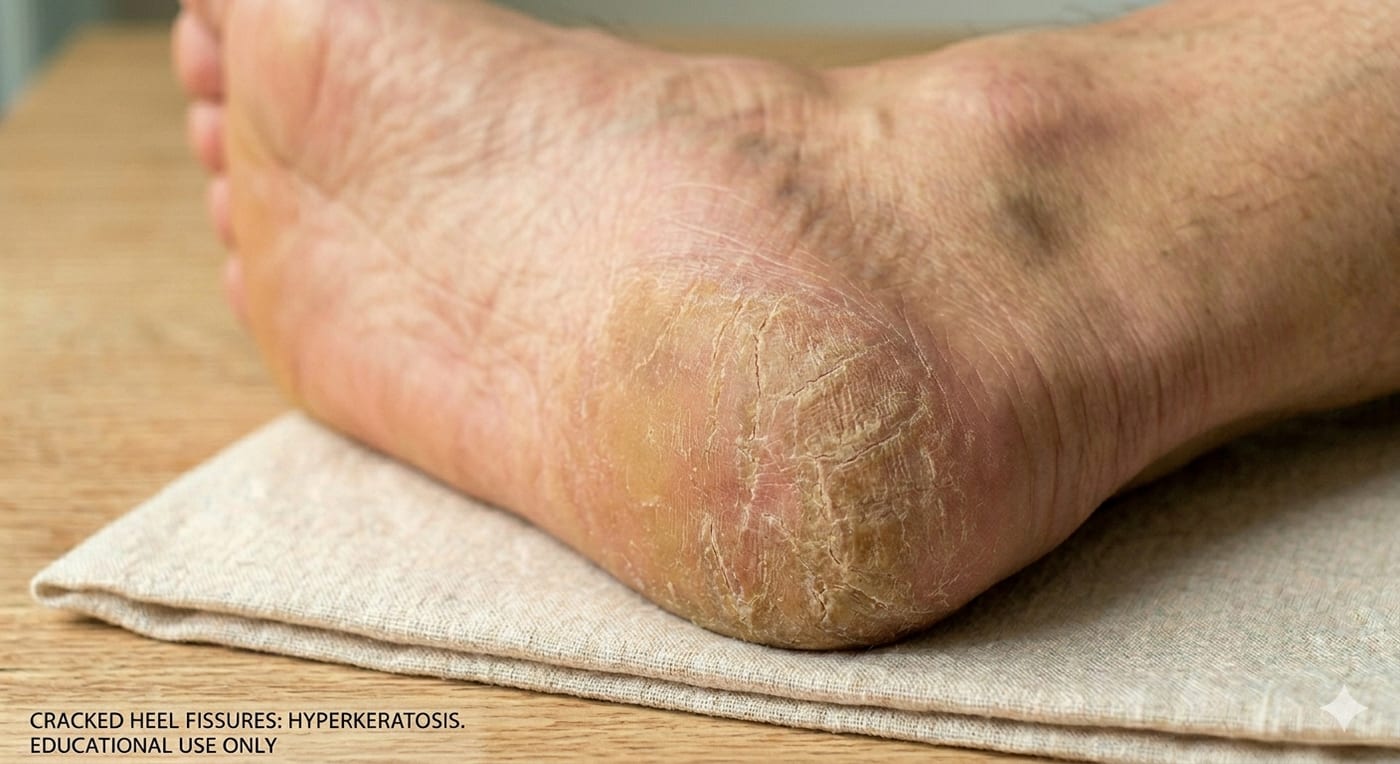
Cracked heels happen when the thickened, dry skin around your heel loses elasticity and splits under pressure. They’re rarely serious, but deeper cracks can hurt, bleed, and let bacteria in. People with diabetes need to take them seriously because of infection risk.
Important, get evaluated first if any of these apply. A deep heel crack can develop into, or be hiding, an underlying ulcer or wound that’s already breached the deeper skin layers. In people with diabetes, peripheral neuropathy, or poor circulation, this is especially dangerous because reduced sensation may mean the deeper damage isn’t painful, and impaired healing means a small crack can become a serious infection. Any deep, painful, bleeding, draining, or non-healing crack, and any cracked heel at all in someone with diabetes, neuropathy, or peripheral arterial disease, should be evaluated by a podiatrist or other clinician before any home treatment.
How to recognize them
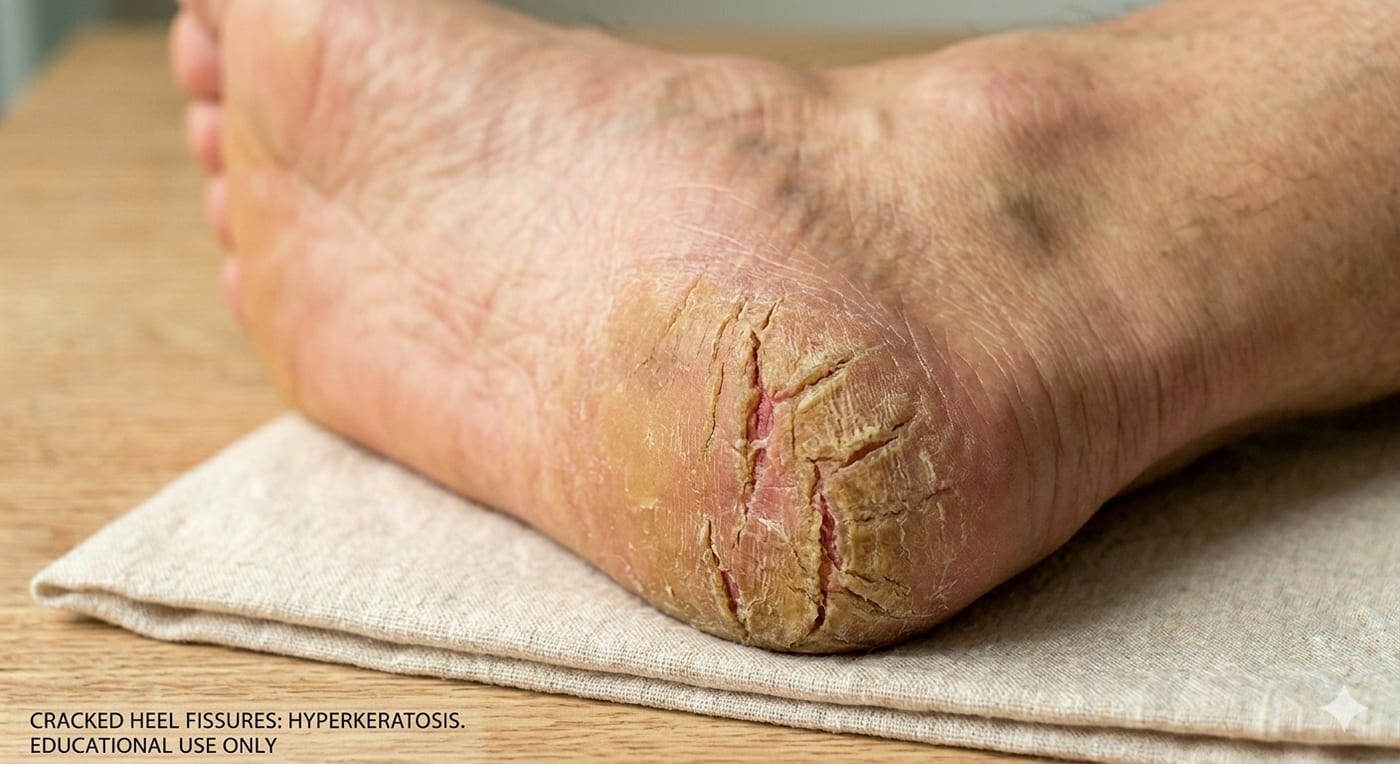
- Visibly cracked or split skin around the heel rim
- Dry, flaky, hard skin at the heel
- Yellowish or brown thickened areas
- Pain when standing in deeper cracks
- Bleeding in severe cases
- Sometimes warmth or redness if infected
Why they happen
Cracks form when thick dry skin meets mechanical stress. The drivers:
- Open-back shoes: sandals, flip-flops let the heel pad spread under load
- Prolonged standing: particularly on hard surfaces
- Dry skin from low humidity, hot showers, harsh soaps
- Aging: skin naturally thins and loses moisture
- Going barefoot at home
- Underlying conditions: eczema, psoriasis, athlete’s foot, hypothyroidism, diabetes
- Vitamin deficiencies: B vitamins, omega-3s contribute to skin health
What to do about them
A simple, consistent routine resolves most cases in 2–4 weeks.
Daily routine
- Soak feet in warm (not hot) water for 10–15 minutes
- Gently exfoliate with a pumice stone or foot file (only on healthy thick skin, not over a crack). Skip this step if you have diabetes, peripheral neuropathy, or any condition that reduces sensation in your feet: you can’t reliably tell healthy callus from injured skin by feel, and over-filing can cause wounds. See a podiatrist for safe debridement instead.
- Apply a thick moisturizer with one of these active ingredients:
- Urea (10–25%), best for thick, scaly skin
- Salicylic acid (low concentration), exfoliates and softens
- Lactic acid / alpha hydroxy acids: moisturizes and exfoliates
- Petroleum jelly: basic but effective for sealing in moisture
- Cover with cotton socks overnight to lock in moisture
What helps long-term
- Change footwear: closed-back shoes reduce heel spread
- Inserts/cushions: gel heel cups distribute pressure
- Limit barefoot time at home
- Shorter, cooler showers: hot water strips skin oils
- Humidifier in dry climates
- Adequate hydration
What NOT to do
- Don’t cut into cracks with scissors or razors
- Don’t use over-the-counter corn removers in cracks (acid in an open wound)
- Don’t ignore infection signs: redness spreading, warmth, drainage, fever
- Don’t try to remove all callus at once: gradual is better
When to see a clinician
- Pain that limits walking
- Cracks that bleed or won’t heal
- Signs of infection (spreading redness, warmth, drainage, fever)
- You have diabetes, peripheral arterial disease, or any condition affecting circulation or sensation
- Recurring cracks despite consistent care
- Suspected underlying skin condition (eczema, psoriasis, fungal infection)
A podiatrist can:
- Debride thick callus safely
- Treat infections
- Identify and address underlying causes
- Recommend prescription-strength moisturizers if over-the-counter options aren’t enough
Prevention
- Daily moisturizer with urea or alpha hydroxy acids
- Closed-back shoes for long days on your feet
- Limit standing on hard floors when possible
- Treat underlying conditions: eczema, athlete’s foot, dry skin elsewhere
- Inspect feet weekly: catch dryness before it cracks
- Stay hydrated
- Cushioned heel inserts if you stand all day
Special note for people with diabetes
Cracked heels are a higher-stakes problem with diabetes:
- Reduced circulation slows healing
- Reduced sensation may mean you don’t feel a deepening crack
- Bacteria can enter through the crack and cause cellulitis or worse
If you have diabetes:
- Inspect heels daily
- Don’t try aggressive home treatment: see a podiatrist for any significant cracks
- Don’t go barefoot even at home
- Treat dryness preventively with daily moisturizer
Frequently asked questions
How do you fix dry, cracked heels fast?
The fastest reliable routine: soak the feet in warm water for 10 to 15 minutes, gently reduce the thick skin with a pumice stone (only on intact skin, never over an open crack), then apply a urea cream (10 to 25%) or petroleum jelly and sleep in cotton socks. Done nightly, most heels improve noticeably within 2 to 4 weeks. Regular body lotion is usually too weak for heel callus; the urea is what softens the thick skin. Skip the pumice entirely if you have diabetes or numbness in your feet, and see a podiatrist instead.
What deficiency causes cracked heels?
Usually none. The overwhelming cause of cracked heels is mechanical: thick, dry skin splitting under the pressure of standing, made worse by open-back shoes and dry climates. Severe deficiencies of vitamins B3 or B7, zinc, or omega-3 fatty acids can contribute to dry, fragile skin, but they're uncommon with a reasonably balanced diet. If your heels crack despite consistent care, an underlying condition like hypothyroidism, eczema, psoriasis, or a fungal infection is a more likely explanation than a vitamin problem.
Are cracked heels a sign of diabetes?
They can be. Diabetes can quietly dry out the feet because nerve involvement reduces sweating in the skin, so cracked heels are sometimes an early clue worth mentioning to your doctor, especially alongside increased thirst, urination, or fatigue. More importantly, if you already have diabetes, a cracked heel is an open door for bacteria in a foot that heals slowly and may not feel injury. Any heel crack in someone with diabetes deserves a podiatrist visit rather than home treatment.
Why are my heels still cracked even though I moisturize?
A few common reasons: regular lotion can't penetrate thick heel callus (you need a keratolytic like urea or lactic acid), the callus itself is too thick and needs to be professionally reduced first, open-back shoes keep splitting the skin faster than it heals, or there's an underlying skin condition like eczema, psoriasis, athlete's foot, or hypothyroidism driving the dryness. If a month of nightly urea cream and closed-back shoes hasn't helped, it's time for a clinician to look.
Can cracked heels heal on their own?
Shallow cracks often do once the skin gets moisture and the pressure eases. Deeper fissures usually don't, because every step re-splits them: the thick callus around the crack acts like a dry riverbank that keeps cracking under load. Those need the callus reduced (pumice at home, or professional debridement), a urea-based cream, and closed-back shoes to heal. Cracks that bleed, hurt, or show any sign of infection should be seen by a clinician.
Sources
Last updated: July 15, 2026

About the author
Written and reviewed by a Doctor of Podiatric Medicine (DPM) practicing in Arizona for 6+ years. Board-certified by the American Board of Podiatric Medicine (ABPM); graduate of Midwestern University Arizona College of Podiatric Medicine.
Last clinically reviewed: July 15, 2026