Quick answer
A blister is your skin’s defense against friction, fluid pools between layers to cushion the damage. Most heal on their own in 3–7 days. The main decisions you’ll make: leave it intact (usually best), drain it (sometimes), or remove the roof (rarely). Plus avoiding infection.
How they form
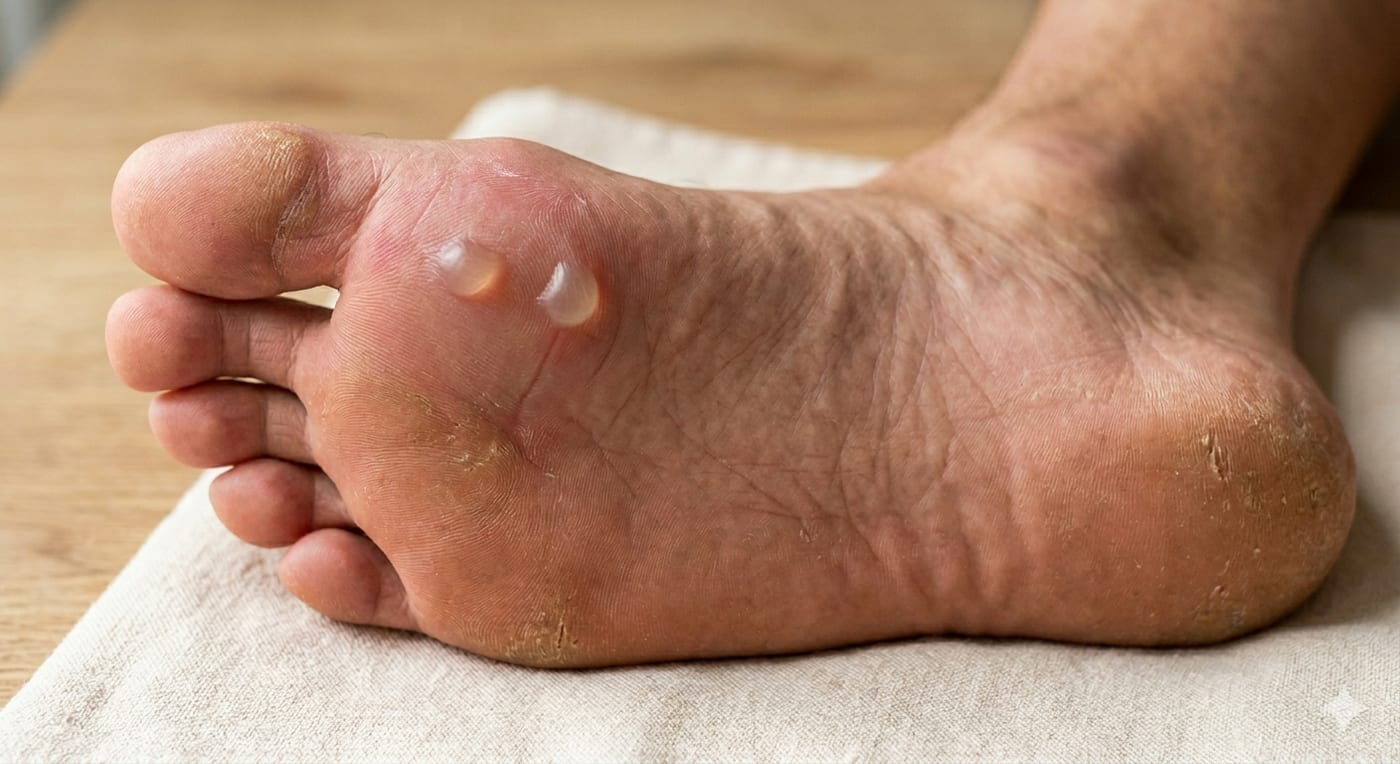
Repeated friction shears apart the layers of skin. Fluid (mostly clear plasma, sometimes blood) fills the resulting space, creating a cushion that protects the deeper damaged tissue. Heat and moisture make it happen faster, which is why hot, sweaty feet in tight shoes blister easily.
Common triggers:
- New shoes that haven’t been broken in
- Long walks or runs
- Hot, humid weather
- Wet feet (rainy hike, river crossing)
- Wrinkled or loose socks
- Sock fabric: cotton holds moisture and worsens friction
- Hiking, dancing, sports with new movements
- Burns (less common as a foot blister cause, but possible)
Types
- Friction blister: clear or slightly yellow fluid; the most common type
- Blood blister: dark, reddish-brown; deeper friction damaged blood vessels
- Burn blister: from heat, cold, or chemicals
What to do about a blister
The general rule: leave it intact if you can. The blister roof is the best dressing.
Small, intact blister
- Cover with a bandage or moleskin: protect from further friction
- Padding with a “donut” of moleskin can offload the area
- Avoid the activity that caused it for a few days
- Let it heal on its own: typically 3–5 days
Painful or large blister
If a blister is so painful that it’s limiting your walking, or so large that it feels like it might burst on its own, see a clinician rather than trying to drain it yourself. Draining a blister is a sterile procedure, the risk of introducing infection is real, and is much higher when done at home, even with careful technique. In the meantime:
- Cover and protect the blister with a non-stick pad or hydrocolloid dressing
- Offload the area: a moleskin “donut” or thicker padding around the blister, not over it
- Avoid the activity that’s irritating it
- Keep the roof intact: even a partially-attached blister roof is the best natural dressing
- Make an appointment with your podiatrist, primary care, or urgent care, sterile drainage in a clinical setting is quick and safe
This is especially important, and the “don’t drain at home” rule is firm, if you have diabetes, peripheral neuropathy, poor circulation, or a weakened immune system.
When the roof has torn off
- Cover with a sterile non-stick dressing to protect the exposed tissue
- Do not trim or cut the loose skin yourself. Live and dead tissue can look similar, and people with neuropathy or reduced sensation cannot reliably tell them apart by touch, a clinician should evaluate and trim if needed
- Keep the area clean: gentle wash with soap and water, pat dry, apply a fresh dressing
- Watch closely for infection: spreading redness, warmth, drainage, or fever
- See a clinician if the area is large, painful, or in someone with diabetes, neuropathy, or impaired circulation
Blood blister
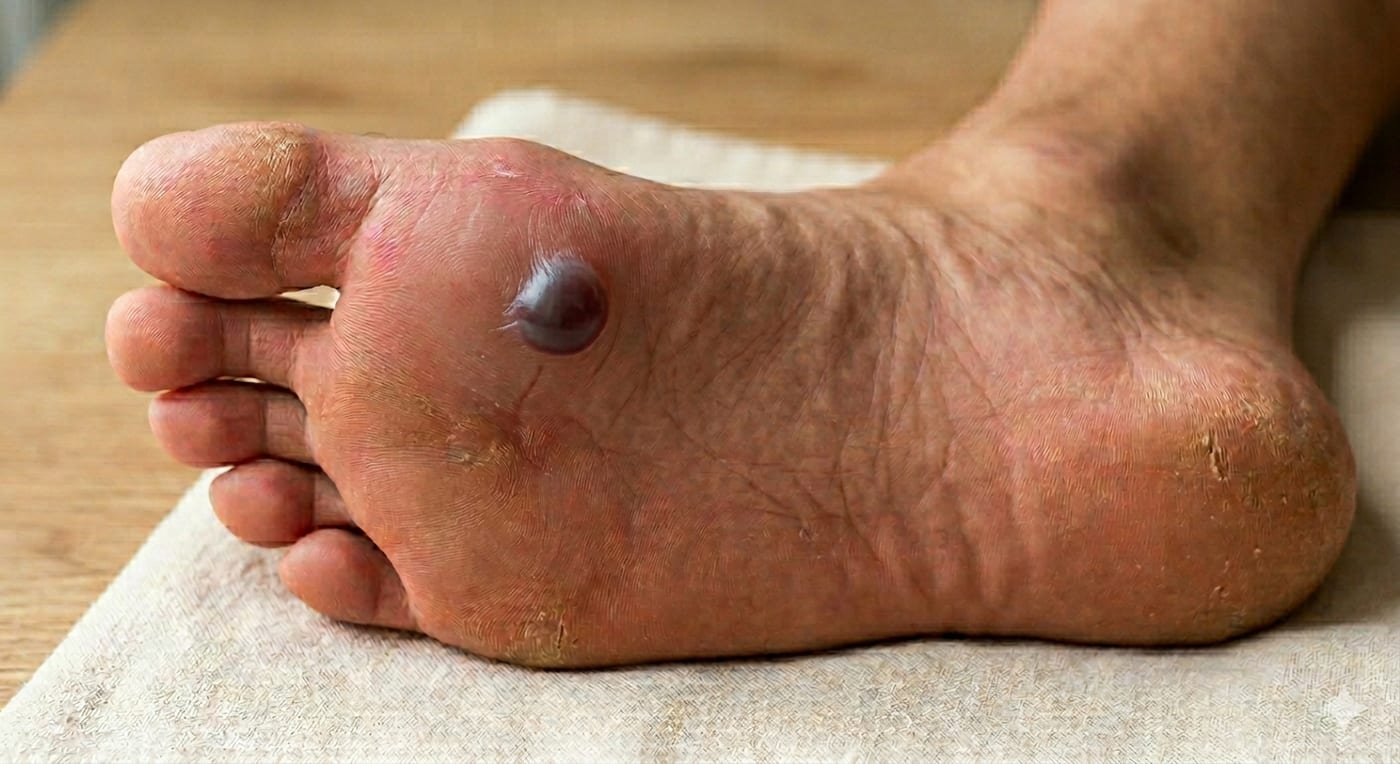
Treat similarly to a regular blister but be more cautious:
- Don’t drain it unless absolutely necessary, higher infection risk
- Cover and protect
- Watch for color or size change
When to see a clinician
- Signs of infection: spreading redness, warmth, swelling, pus, fever, red streaks
- Multiple large blisters from no clear cause (could indicate a skin condition)
- Blisters that keep returning in the same spot (suggests an underlying mechanical or structural cause)
- Blisters from a burn, particularly large or in sensitive areas
- Any blister if you have diabetes: don’t self-treat; the infection risk is higher
- A blood blister that’s growing or spreading
- Pain that’s out of proportion to the visible blister
Prevention
If you blister easily, especially during hikes, runs, or new activities:
Sock strategy
- Synthetic or wool socks: wick moisture away
- Avoid cotton: holds moisture against the skin
- Double-layer socks for long hikes, inner liner reduces friction
- Change socks mid-run or mid-hike if they get wet
Shoe fit
- Properly fitted: not too loose (sliding) or tight
- Break in new shoes gradually, short walks first
- Lace properly: heel seated firmly, no excess pressure points
Skin protection
- Lubricants: petroleum jelly, anti-chafing balms, body glide on hot spots
- Moleskin or kinesio tape preventively over known hot spots
- Tincture of benzoin: toughens skin in problem areas (used by hikers, athletes)
- Talc or antifungal powder: keeps skin dry
Listen for early warning signs
- A “hot spot”, burning or stinging that precedes a blister
- Stop and address it immediately: apply moleskin or change socks
- Many blisters can be prevented in this 5-minute window
Last updated: April 26, 2026

About the author
Written and reviewed by a Doctor of Podiatric Medicine (DPM) practicing in Arizona for 6+ years. Board-certified by the American Board of Podiatric Medicine (ABPM); graduate of Midwestern University Arizona College of Podiatric Medicine.
Last clinically reviewed: April 26, 2026