Quick answer
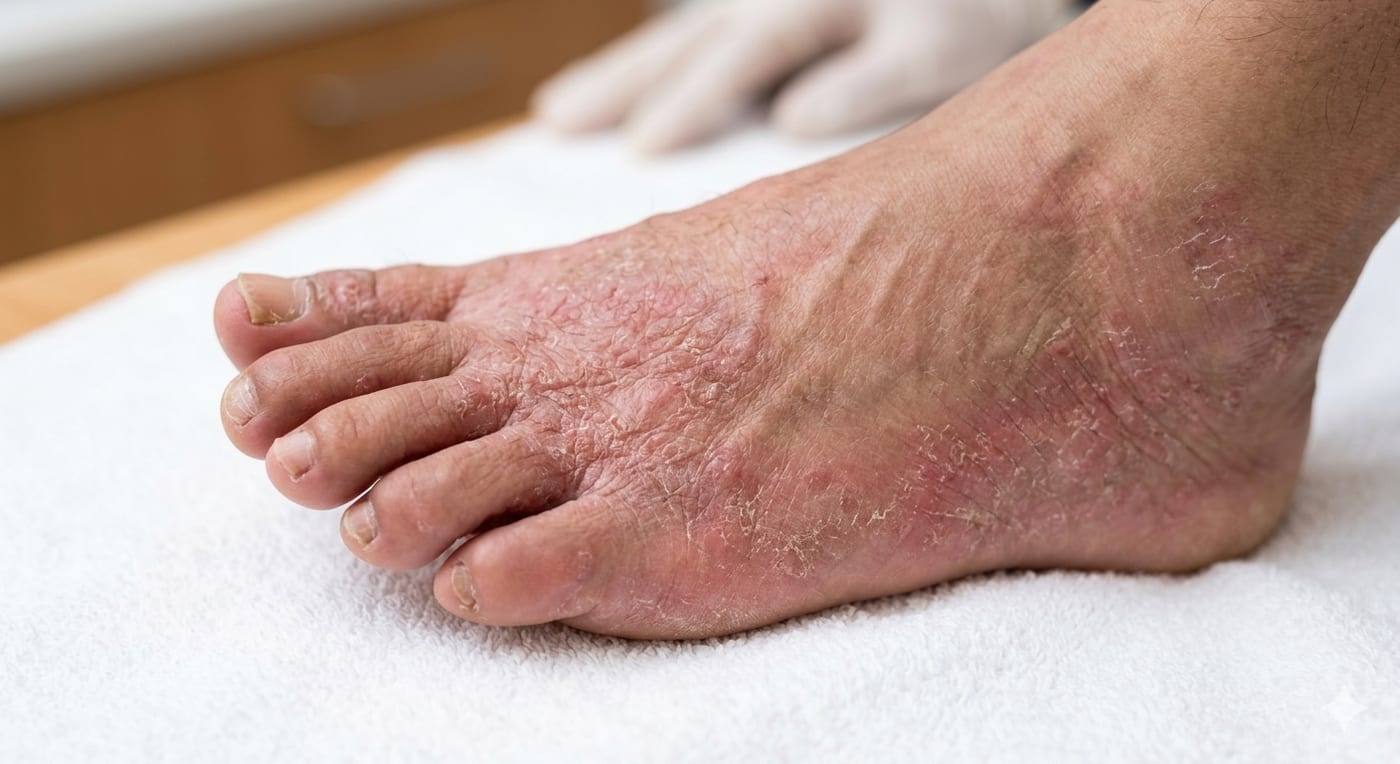
Foot eczema is an inflammatory skin condition, not an infection, that produces itchy, dry, scaly, sometimes blistering skin on the feet. It’s most often a manifestation of the same atopic skin tendency that causes eczema elsewhere. The most distinctive subtype on the foot is dyshidrotic eczema (also called pompholyx), which causes small, deep-seated, intensely itchy blisters on the sides of the toes and the soles.
Important, get evaluated first. Several things can look like foot eczema: athlete’s foot (fungal), contact dermatitis (allergic or irritant reaction to something the foot is touching), psoriasis, scabies, or other inflammatory conditions. Treating the wrong thing wastes time and can make some conditions worse. A clinician can usually distinguish them in seconds, sometimes with a simple KOH prep, scraping, or skin biopsy if needed. Especially important if you have diabetes or peripheral neuropathy: get any persistent foot rash evaluated before self-treating.
Subtypes that involve the feet
Atopic dermatitis (classic eczema)
- Itchy, scaly, dry patches on top of the feet, ankles, or in skin folds
- Lichenification: thickened, leathery skin from chronic rubbing
- Usually accompanies eczema elsewhere (knees, elbows, wrists, neck)
- Often starts in childhood and waxes and wanes
Dyshidrotic eczema (pompholyx)
- Small, deep-seated, intensely itchy blisters on the sides of the toes and the soles
- Blisters look like “tapioca pearls” embedded in the skin
- Acute flares that resolve over 2–4 weeks, often recurrent
- More common in adults, especially with stress, sweating, or seasonal changes
- Can be confused with athlete’s foot if blisters are between the toes
Asteatotic eczema
- Dry, cracked, scaly skin with a “cracked porcelain” appearance
- Common in older adults and during dry winter months
- Especially the lower legs but can affect feet
How to recognize it
- Itchy: eczema is fundamentally an itch condition
- Dry, scaly, sometimes inflamed red patches
- Tiny clear blisters on the sides of the toes (dyshidrotic)
- Skin thickening in chronic cases (lichenification)
- Cracking and fissuring especially on the heels and soles in chronic cases (see cracked heels)
- Symmetric: usually affects both feet in similar patterns
- Personal or family history of eczema, asthma, or hay fever
- Doesn’t respond to antifungal creams (the most useful clinical clue)
What can trigger or worsen it
- Heat and sweat: sweaty feet in closed shoes
- Frequent water exposure: swimmers, dishwashers, healthcare workers
- Soaps and detergents: strip the skin barrier
- Stress: well-documented eczema trigger
- Wool socks: irritating to many eczema-prone people
- Cold, dry weather: winter flares are common
- Allergens: though allergic contact dermatitis is a separate diagnosis
- Friction from poorly-fitted shoes
Diagnosis
- Clinical exam: pattern, distribution, history of atopy
- KOH prep: scrapes the skin and looks under microscope to rule out fungal infection (athlete’s foot looks similar)
- Patch testing: when contact dermatitis is suspected as a trigger
- Skin biopsy: for atypical cases or to rule out psoriasis or other conditions
Treatment
Skincare basics (foundation of treatment)
- Moisturize daily: thick creams or ointments work better than lotions. Petroleum jelly, ceramide-based creams (CeraVe, Cetaphil), urea or lactic acid for thicker skin
- Soak-and-seal: short lukewarm bath, then apply moisturizer to damp skin within 3 minutes
- Avoid hot water: strips natural oils
- Mild, fragrance-free cleansers: soap-free if possible
- Cotton socks: synthetic and wool fabrics worsen many cases; change socks if they get sweaty
- Breathable shoes: let feet dry out between wears
- Identify and avoid triggers
Topical anti-inflammatories
- Hydrocortisone 1% (over-the-counter): for mild cases, short courses
- Prescription-strength topical corticosteroids: moderate to strong potency for the thicker plantar skin (which absorbs less than other areas). Specific medication and dosing determined by your clinician
- Topical calcineurin inhibitors (tacrolimus, pimecrolimus), steroid-sparing alternatives for chronic use, especially in thinner skin
- Topical PDE4 inhibitors (crisaborole, roflumilast), newer non-steroidal options
For dyshidrotic eczema specifically
- Cool compresses during acute flares
- Drying agents (Burow’s solution / aluminum acetate soaks) to dry out vesicles
- Topical steroids for the underlying inflammation
- Antihistamines at night to reduce nighttime scratching
- Stress management: common trigger
For severe or refractory cases
- Phototherapy: narrow-band UVB
- Oral corticosteroids: short courses for severe flares
- Systemic immunomodulators: methotrexate, cyclosporine, dupilumab (newer biologic)
- Referral to dermatology for a dedicated treatment plan
When to see a clinician
- Diagnosis is unclear: particularly if antifungal treatment isn’t helping
- Not improving with over-the-counter moisturizer and hydrocortisone
- Severe itching disturbing sleep
- Cracked or weeping skin with possible signs of secondary infection
- You have diabetes, peripheral neuropathy, or poor circulation
- Recurring flares that need a long-term management plan
Important: don’t confuse with athlete’s foot
The most common misdiagnosis. A few clues:
- Athlete’s foot: often between the toes first, scaly, may be macerated/white. Responds to antifungals.
- Eczema: symmetric, itchy, history of atopy, doesn’t respond to antifungals.
- Both can coexist: and treating one without the other prolongs symptoms.
If a “fungal infection” doesn’t clear after 4 weeks of consistent antifungal use, get reevaluated.
Bottom line
Foot eczema is a chronic inflammatory condition, not an infection. It’s managed with moisturizer, trigger avoidance, and topical anti-inflammatories: the same playbook used elsewhere on the body. The most common pitfalls are misdiagnosing it as athlete’s foot or undertreating with too-weak medications for the thick plantar skin. If a foot rash isn’t responding to antifungals, eczema (or contact dermatitis) should be high on the list.
Sources
Last updated: July 16, 2026

About the author
Written and reviewed by a Doctor of Podiatric Medicine (DPM) practicing in Arizona for 6+ years. Board-certified by the American Board of Podiatric Medicine (ABPM); graduate of Midwestern University Arizona College of Podiatric Medicine.
Last clinically reviewed: July 16, 2026