
Quick answer
Psoriasis of the feet is an autoimmune skin condition where the immune system signals skin cells to turn over too fast. The result: thick, scaly, red patches, sometimes with sterile pustules. It’s frequently confused with athlete’s foot, eczema, or contact dermatitis. The key difference: it doesn’t respond to antifungal creams.
How to recognize it
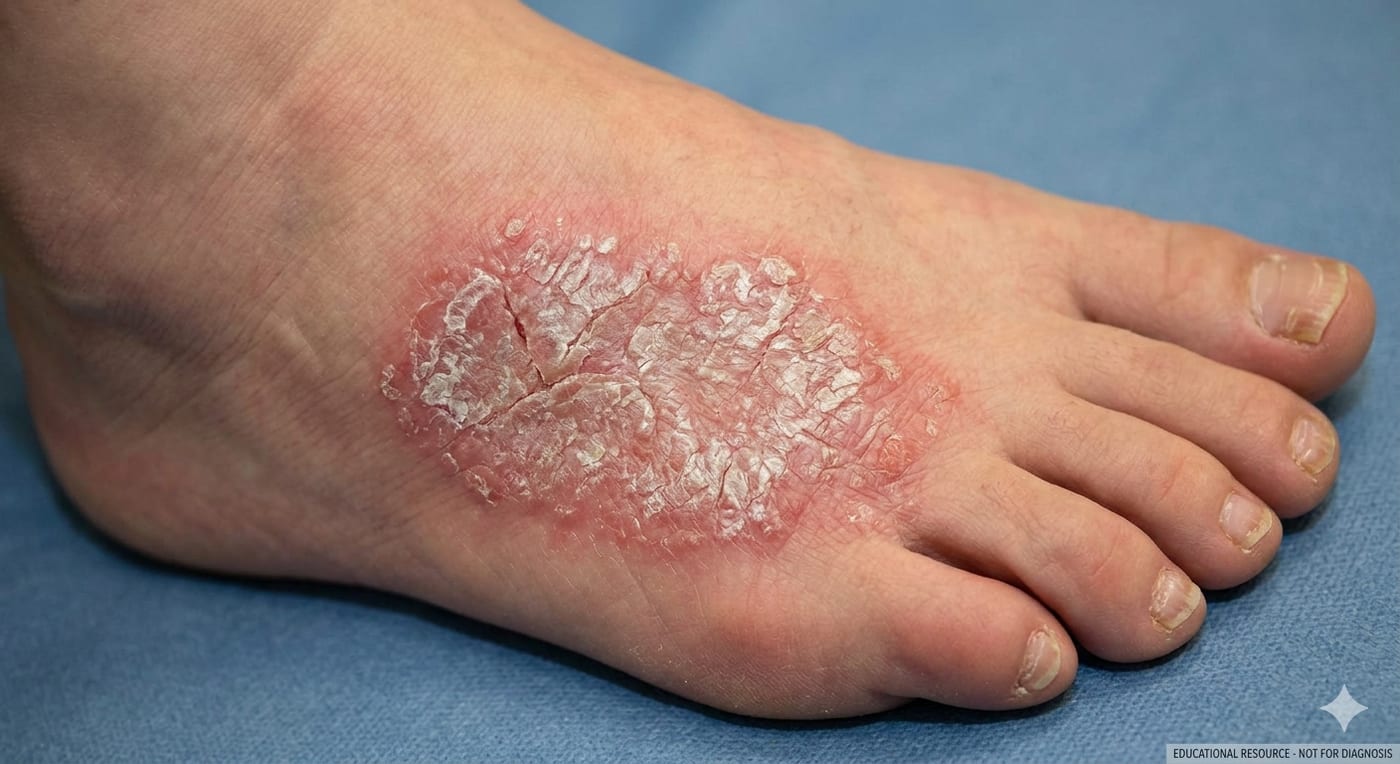
Plaque psoriasis on the soles
- Thick, red patches with silvery scale
- Sharply demarcated edges (clear border between affected and normal skin)
- Fissures and cracks in the thick skin (a common cause of stubborn cracked heels)
- Often bilateral (both feet)
- May involve the toenails (pitting, separation from the nail bed (onycholysis), discoloration, though this is psoriatic, not fungal)
- May coexist with psoriasis elsewhere on the body
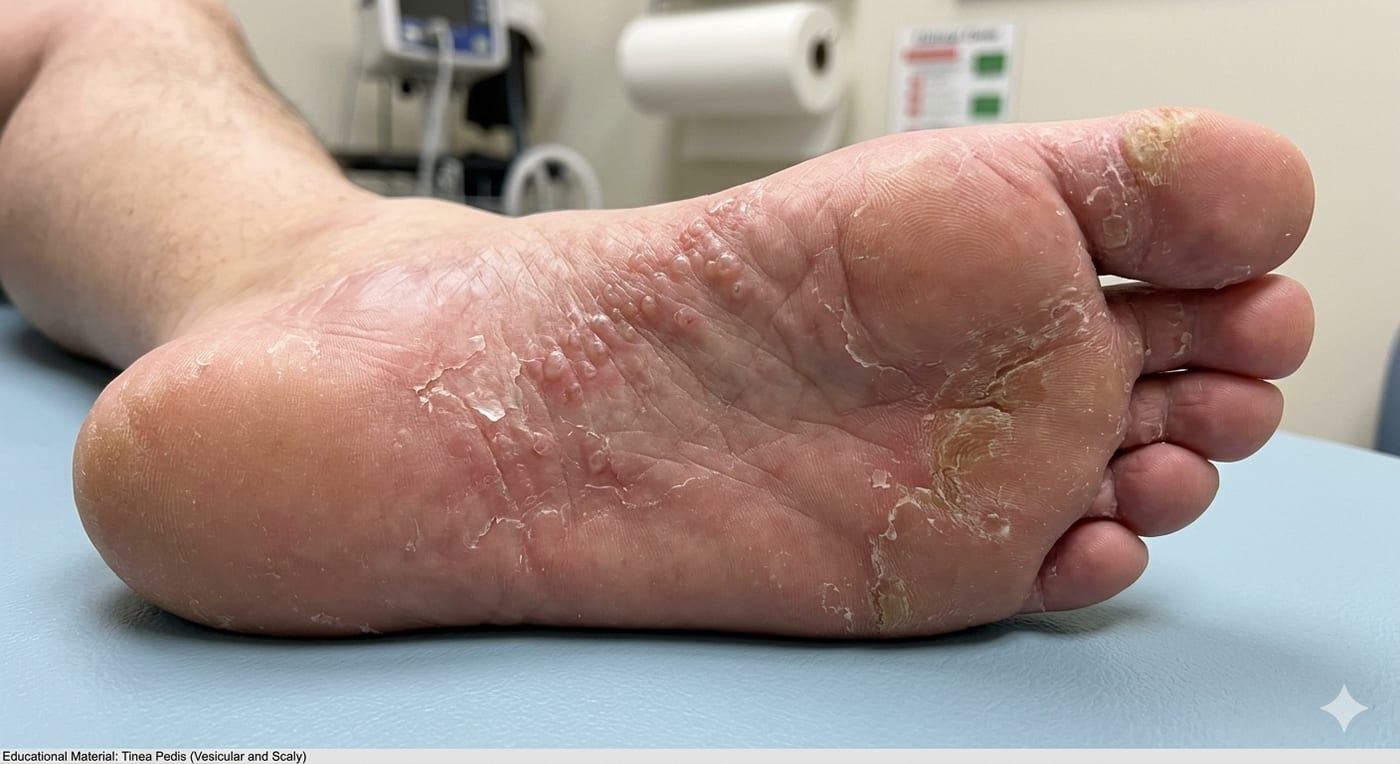
Palmoplantar pustulosis
- Small fluid-filled blisters (pustules) on the soles, sometimes both palms and soles
- Pustules turn yellow-brown, then dry into scaly patches
- Pustules are sterile despite their appearance, not infectious
- Strongly associated with smoking
- Can be debilitating despite limited body surface area
Distinguishing from look-alikes
Psoriasis is often confused with other foot rashes:
| Psoriasis | Athlete’s foot | Eczema | |
|---|---|---|---|
| Borders | Sharp, well-defined | Fuzzy, spreading | Indistinct |
| Scale | Silvery, thick | Fine, peeling | Variable |
| Itch | Variable | Often intense | Usually intense |
| Symmetry | Often symmetric | Variable | Variable |
| Nail involvement | Common (pitting) | Possible (thickening) | Rare |
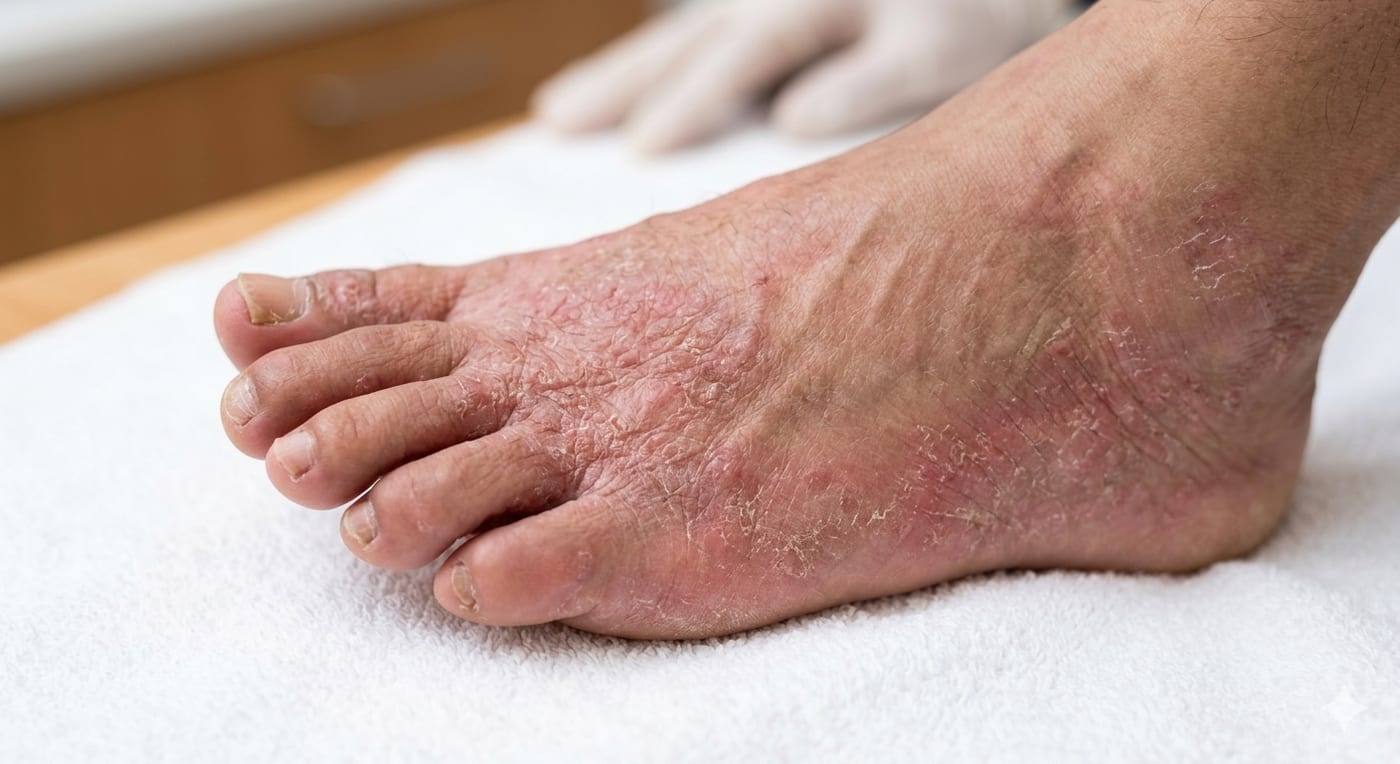
When the diagnosis isn’t clear, a skin biopsy confirms.
Why it happens
Psoriasis is a genetic predisposition combined with triggers:
- Genetics: strongly familial
- Immune system dysregulation: T-cells produce inflammatory signals that drive skin cell overproduction
- Triggers: stress, infections (especially strep), skin injury, certain medications, smoking
- Smoking is a particular driver of palmoplantar pustulosis
- Cold, dry weather can worsen flares
Treatment options
Psoriasis isn’t curable, but it can be controlled effectively in most patients.
Topical treatments (first-line for limited disease)
- Potent topical corticosteroids (clobetasol, betamethasone), most commonly used; cycled to limit side effects
- Vitamin D analogs (calcipotriene), slow skin cell turnover
- Coal tar: older but effective
- Salicylic acid: softens thick scale, helps other treatments penetrate
- Tazarotene (vitamin A derivative), sometimes added
- Calcineurin inhibitors (tacrolimus, pimecrolimus), fewer side effects for sensitive areas
Application typically requires occlusion (cover with plastic wrap or socks) at night for the soles to penetrate the thick skin.
Phototherapy
- Targeted UVB or PUVA: good option for moderate disease
- Treats only affected areas: avoids whole-body exposure
- Requires multiple visits per week initially
Systemic treatments (for moderate-severe or refractory)
- Methotrexate: oral; reliable but requires monitoring
- Cyclosporine: short-term for severe flares
- Acitretin: vitamin A derivative; useful for hand-foot involvement
- Apremilast: oral; fewer monitoring requirements
Biologics (for moderate-severe)
- TNF inhibitors (adalimumab, etanercept, infliximab)
- IL-17 inhibitors (secukinumab, ixekizumab), often very effective for palmoplantar disease
- IL-23 inhibitors (guselkumab, risankizumab)
- These are injected or infused; need rheumatologist or dermatologist supervision
When to see a clinician
- A foot rash that doesn’t respond to antifungal creams
- Sharply-demarcated red, scaly patches
- Sterile pustules on the soles
- Personal or family history of psoriasis plus a new foot rash
- Significant pain, fissuring, or impact on walking
- Failed over-the-counter treatments
Living with it
- Stop smoking: particularly important for palmoplantar pustulosis
- Moisturize regularly: thick emollients help maintain the skin barrier
- Manage stress: a recognized trigger
- Avoid skin trauma: friction from shoes, picking at scale, etc.
- Cushioned shoes to reduce mechanical pressure
- Connect with the National Psoriasis Foundation: support and current treatment information
- Check for psoriatic arthritis: joint pain alongside skin disease should be evaluated; affects up to 30% of psoriasis patients
Bottom line
If you have a foot rash that doesn’t respond to antifungal cream, especially if it’s sharply demarcated and silvery-scaled, see a dermatologist. Psoriasis treatments are completely different from athlete’s foot treatments, and getting the right diagnosis matters.
Frequently asked questions
What does psoriasis on feet look like?
Foot psoriasis typically appears as well-demarcated, scaly, salmon-pink to red plaques with silvery-white scale on the soles, heels, sides, or tops of the feet. The plaques have sharp borders (unlike athlete's foot, which fades gradually into normal skin), are often symmetric (both feet involved similarly), and the toenails may show pitting, oil-spot discoloration, or onycholysis. Palmoplantar pustular psoriasis: a distinct subtype, appears as crops of small pus-filled blisters on a red base, often on the arches.
Foot psoriasis vs athlete's foot, how do you tell them apart?
Athlete's foot (tinea pedis) is a fungal infection, itchy, often between the toes or on the moccasin-distribution sole, fades into surrounding skin, usually on one foot more than the other, responds to antifungal cream within 2 weeks. Foot psoriasis is an autoimmune condition, usually symmetric (both feet), sharply demarcated plaques, often involves the nails simultaneously, doesn't respond to antifungals. A KOH preparation from the skin can confirm or rule out fungus in 5 minutes. Many people with 'recurrent athlete's foot' actually have psoriasis.
How is foot psoriasis treated?
Treatment depends on severity. Mild plaques are treated with topical corticosteroids (often potent class because plantar skin is thick), vitamin D analogs (calcipotriene), and emollients. Moderate to severe disease may need phototherapy (narrow-band UVB) or systemic treatment, methotrexate, cyclosporine, apremilast, or biologics (TNF inhibitors, IL-17 or IL-23 blockers). Treatment of foot psoriasis is usually coordinated by a dermatologist; podiatry helps with shoe selection, fissure care, and managing nail involvement.
Is foot psoriasis contagious?
No. Psoriasis is an autoimmune condition driven by the body's own immune system inappropriately attacking the skin. It's not caused by an infection, doesn't spread by contact, and can't be transmitted to family members or contacts. The genetic predisposition does run in families, children of a parent with psoriasis have an elevated risk of developing it themselves, but that's heritability, not contagion. People with psoriasis can safely share towels, shoes, swimming pools, and intimate contact.
Can foot psoriasis be cured?
Psoriasis is a chronic relapsing condition that currently cannot be cured, but modern treatment can put it into long-lasting remission, sometimes for years at a time. The newer biologic medications targeting IL-17 and IL-23 have dramatically changed outcomes for moderate-to-severe disease; many patients now achieve completely clear skin on biologics. Treatment goals are realistic remission and good quality of life rather than 'cure.' Triggers (stress, infection, smoking, certain medications) can be managed to reduce flare frequency.
Sources
Last updated: July 16, 2026

About the author
Written and reviewed by a Doctor of Podiatric Medicine (DPM) practicing in Arizona for 6+ years. Board-certified by the American Board of Podiatric Medicine (ABPM); graduate of Midwestern University Arizona College of Podiatric Medicine.
Last clinically reviewed: July 16, 2026