
Quick answer
A subungual hematoma is bleeding underneath a toenail, usually from trauma, stubbing the toe, dropping something on it, or repetitive impact from running or hiking in shoes that are too tight. The trapped blood causes the classic black, purple, or dark red discoloration and often significant pain from pressure under the nail. Small hematomas resolve on their own. Large or painful ones can be drained in clinic in under a minute. The nail may fall off and regrow over 6 to 12 months.
The most important question with any dark nail spot: was there an injury? Hematomas have an injury cause and grow out with the nail. A pigmented streak that appears without injury and persists in place can be a sign of subungual melanoma and needs urgent evaluation.
What it is
Beneath every toenail sits a layer of soft tissue called the nail bed, packed with small blood vessels. When force is applied to the nail (a sharp stub, a heavy drop, repeated impact), those vessels can rupture and bleed into the closed space between the nail and the bed. Because the nail is rigid, the blood has nowhere to go and pressure builds quickly, causing throbbing pain.
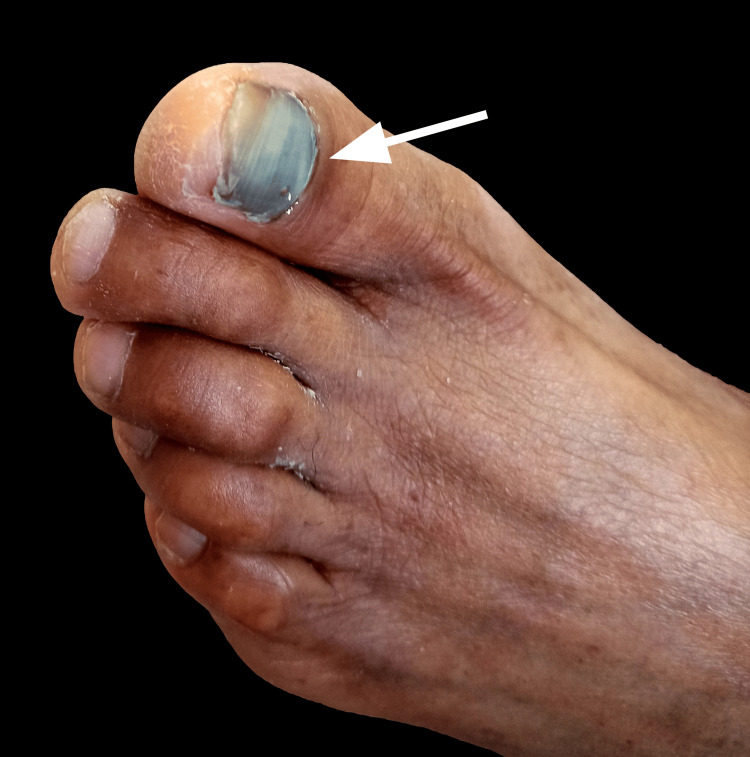
The trapped blood is what produces the visible discoloration. Fresh blood looks bright red. Within hours it darkens to purple, then to brown or black as the hemoglobin breaks down. The shape often follows the impact pattern: a circular spot at the point of impact, or a wide band across the front of the nail in runners.
Two patterns of injury
Acute (single-event) subungual hematoma
A discrete moment of injury, a stubbed toe, a heavy object dropped on the foot, a sports collision. Pain appears immediately and the discoloration develops over minutes to hours. Often associated with an underlying toe fracture, especially when the hematoma covers more than 25% of the nail surface.
Chronic (repetitive) subungual hematoma: “runner’s toe”
Repeated low-force impact, classically from:
- Long-distance running, especially downhill
- Hiking with the toes hitting the front of the boot
- Tennis or pickleball stop-and-go pivots
- Soccer or kick-based sports
- Shoes that are slightly too short, too tight in the toe box, or too loose (allowing forward sliding)
The hematoma often appears under the great toenail or the second toe (whichever is longest). Pain is often less severe than acute injury but the nail discoloration is similar.
Symptoms
- Throbbing pain under the nail, often worse with pressure or at night
- Visible dark discoloration under all or part of the nail (red, purple, brown, or black depending on age of blood)
- Tenderness when the nail is touched or when shoes press on it
- Swelling of the toe in significant injuries
- Loosening of the nail in the weeks after injury
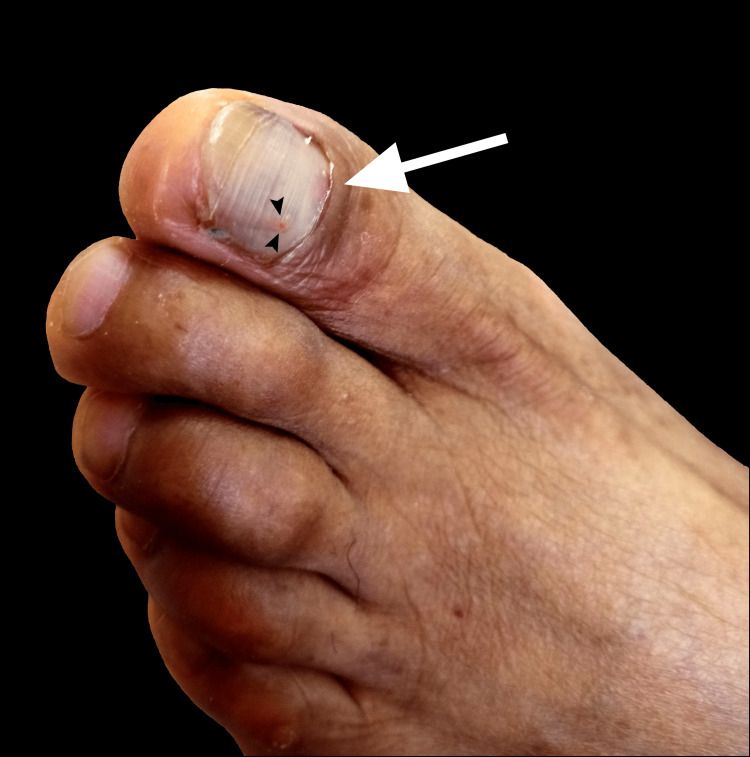
- Eventual loss of part or all of the nail, with new nail growing in from the base
Treatment
The right approach depends on size, pain, and whether there is an underlying fracture.
Small, painless hematoma (less than 25% of nail surface)
- Observation. The blood will gradually be absorbed, and the discolored area will grow out with the nail over 6 to 12 months.
- Trim the nail short to prevent catching on socks
- Wear roomier shoes while it heals
- Ice and elevate the toe for the first 24 to 48 hours
Large or painful hematoma (more than 25% of nail surface, or significant pain)
- In-office drainage (trephination). A clinician makes a small hole in the nail using a sterile heated needle, an electrocautery device, or a small drill. The trapped blood drains out, pressure releases immediately, and pain is dramatically relieved within minutes.
- The procedure typically takes under one minute and does not usually require local anesthesia, because the nail itself has no nerve endings.
- After drainage, the toe is bandaged. Mild oozing for a day or two is normal.
When the underlying nail bed is lacerated
If the nail bed itself is torn (often signaled by a hematoma covering more than half the nail and severe pain), the nail may need to be removed (avulsed) so the bed can be cleaned, repaired with sutures, and protected during healing. This is more common with crush injuries.
Editorial note on at-home drainage
We do not recommend draining a subungual hematoma yourself. While the procedure is conceptually simple, doing it at home risks infection, incomplete drainage, and damage to the underlying nail bed. The cost of an in-office drainage is typically modest, the procedure is fast, and a clinician can also evaluate for an underlying fracture and provide proper aftercare instructions.
How to tell it apart from melanoma
This is the most important distinction in nail discoloration, because subungual melanoma is rare but lethal if missed.
| Feature | Subungual hematoma | Subungual melanoma |
|---|---|---|
| Trigger | Clear injury (stub, drop, repetitive impact) | No injury, or trivial injury used as explanation |
| Onset | Hours to a day after injury | Gradual over weeks to months |
| Movement with growth | Moves toward the nail tip as nail grows | Stays in place or extends back into the cuticle |
| Hutchinson’s sign | Absent (color stays under the nail) | Pigment may extend into the cuticle, nail fold, or surrounding skin |
| Shape | Often follows impact pattern, well-defined edges | Often irregular, may have multiple shades of brown or black |
| Width changes | Usually shrinks as it grows out | Often widens or darkens over time |
| Skin tone considerations | Looks dark red, purple, brown, black | On darker skin tones, melanoma is the most common skin cancer of the foot and is often missed; any new pigmented streak under a nail in any skin tone deserves evaluation |
When in doubt, the 3-month rule: if a dark nail mark is not clearly migrating toward the tip of the nail after 3 months, see a clinician. A simple visit and (if needed) biopsy can confirm or rule out melanoma.
When to see a clinician
- Severe pain under the nail
- Hematoma covering more than 25% of the nail surface (often associated with nail bed laceration or toe fracture)
- Suspected fracture (significant swelling, deformity, inability to bear weight)
- Signs of infection (increasing redness, warmth, pus, fever, red streaking)
- Pigmented streak without injury, growing or changing, or extending into surrounding skin
- Diabetes or peripheral arterial disease, where any nail trauma deserves more careful evaluation
- A nail injury that is not improving in expected timeline
Prevention
- Properly fitting shoes: toe box should allow about a thumb’s width of room beyond the longest toe
- Lace running shoes snugly to prevent forward foot slide on downhills
- Trim toenails short and straight across, not too short
- Wear closed-toe shoes when working with anything that could fall on the foot
- Replace running shoes every 300 to 500 miles
- Address related foot mechanics: bunions, hammertoes, Morton’s neuroma, and a long second toe can all change which toe takes the most impact
Bottom line
A black toenail is usually a subungual hematoma, bleeding under the nail from trauma. Small ones resolve on their own. Large or painful ones can be drained in clinic in under a minute. The nail may fall off and regrow over 6 to 12 months. Get any dark nail mark checked by a clinician if it appeared without injury, is not growing out with the nail, or extends into the surrounding skin: these features can signal subungual melanoma, which is rare but treatable when caught early.
Frequently asked questions
Why is my toenail turning black?
The most common cause is bleeding under the nail (subungual hematoma) from trauma. The blood looks dark red, purple, brown, or black depending on how old it is. A clear injury cause (stubbing, dropping something, running downhill in tight shoes) plus the dark color appearing within hours to a day points to a hematoma. A pigmented streak that appears without an injury, especially one that extends into the cuticle or surrounding skin, needs urgent evaluation to rule out melanoma.
Should I drain my own subungual hematoma at home?
Generally no. While simple drainage is a low-risk procedure when done correctly, doing it at home risks infection, incomplete drainage, and damage to the nail bed. A clinician can drain it with a sterile heated needle or a small drill in under a minute and check for an underlying fracture. If the hematoma is small (less than 25% of nail surface) and not painful, it usually does not need drainage at all.
How long does it take for a black toenail to grow out?
A toenail grows about 1 to 2 millimeters per month, so a discolored area at the base can take 6 to 12 months to fully grow out. The dark patch will gradually move toward the tip of the nail as new clear nail grows in behind it. The nail itself may also fall off (avulsion) in the weeks after the injury, especially if the hematoma was large.
Is a black toenail the same as toenail fungus?
No, but they get confused. Subungual hematoma is dark from blood and usually has a clear injury cause; the discoloration moves with the nail as it grows out. Toenail fungus (onychomycosis) usually causes yellow, white, or brown discoloration, with thickening, crumbling, and debris under the nail; it spreads slowly over months without an injury cause.
When should I worry about a black spot under my nail?
See a clinician promptly if the dark spot appeared without any injury, has been growing or changing shape, extends into the cuticle or skin around the nail (Hutchinson's sign), or persists in the same position as the nail grows out. These features can be signs of subungual melanoma, a rare but serious skin cancer. Also seek care for severe pain, signs of infection, or a hematoma covering more than 25% of the nail surface (which often signals an underlying nail bed laceration or toe fracture).
Will my toenail fall off after a hematoma?
Often yes, especially if the hematoma was large or the trauma was significant. The damaged portion of the nail loses its attachment to the bed and gradually loosens. A new nail grows in underneath over 6 to 12 months. Keep the area clean and protected, trim the loose nail short to prevent catching, and watch for signs of infection (increasing redness, warmth, pus, fever).
What looks like a scab under my toenail, is that blood?
Almost always, yes. A dark patch under the toenail that looks crusty or scab-like is dried blood from a subungual hematoma, usually from a stub, drop, or repetitive impact from running, hiking, or pickleball. Fresh blood looks bright red; as it ages it darkens through purple, brown, and finally black, which is when most people first describe it as looking like a scab. True scab tissue under an intact nail plate is uncommon because the nail seals out the air needed for normal scab formation. If the dark area appeared without an obvious injury, isn't moving toward the tip of the nail as the nail grows, or extends into the cuticle or surrounding skin, that's the pattern that needs in-person evaluation to rule out subungual melanoma.
How do I know if my black toenail is from trauma or something else?
Trauma-related black toenails (subungual hematoma) almost always have a clear cause, a stub, a heavy drop, running downhill in tight shoes, or repetitive impact in racquet sports. The discoloration appears within hours to a day and migrates toward the tip of the nail as the nail grows. The shapes Google shows for 'black toenail from trauma' images are consistent: a discrete dark area following the impact line, well-circumscribed edges, and clear forward movement over weeks. A black streak that appeared without injury, stays in the same spot as the nail grows, gets wider, or spreads to the cuticle needs evaluation to rule out subungual melanoma. Toenail discoloration that's yellow, white, or crumbly with thickening is usually toenail fungus, not a hematoma.
Sources
Last updated: July 16, 2026

About the author
Written and reviewed by a Doctor of Podiatric Medicine (DPM) practicing in Arizona for 6+ years. Board-certified by the American Board of Podiatric Medicine (ABPM); graduate of Midwestern University Arizona College of Podiatric Medicine.
Last clinically reviewed: July 16, 2026