
Quick answer
A plantar wart is a virus-caused growth on the bottom of the foot. The virus is HPV, picked up through tiny breaks in the skin, usually from walking barefoot on damp public surfaces. Most go away on their own, but they can hurt and spread, so treatment is often worth it.
Important, make sure it’s actually a wart first. Several things on the bottom of the foot can look like plantar warts but aren’t: a callus, porokeratosis plantaris discreta (PPD), a foreign body (splinter, hair), a pressure ulcer hidden under thick skin, or rarely a melanoma or squamous cell carcinoma. Don’t apply salicylic acid to a lesion you haven’t had confirmed. A clinician can usually tell the difference in seconds. This matters most in people with diabetes, peripheral neuropathy, or poor circulation: get any new lesion on the sole evaluated before treating.
How to recognize one
- Small, rough, grainy patch on the sole of the foot
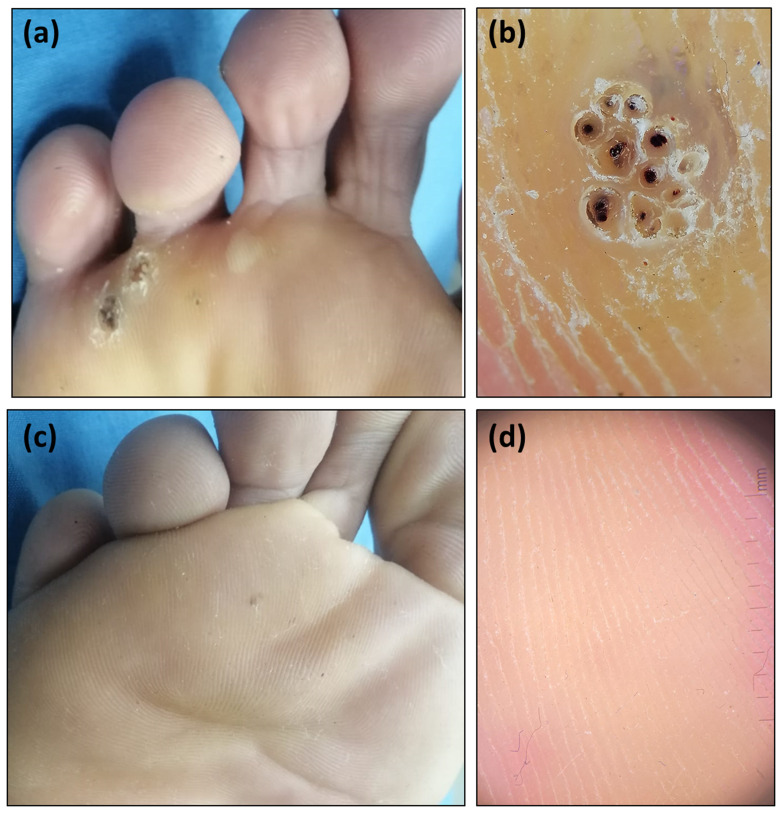
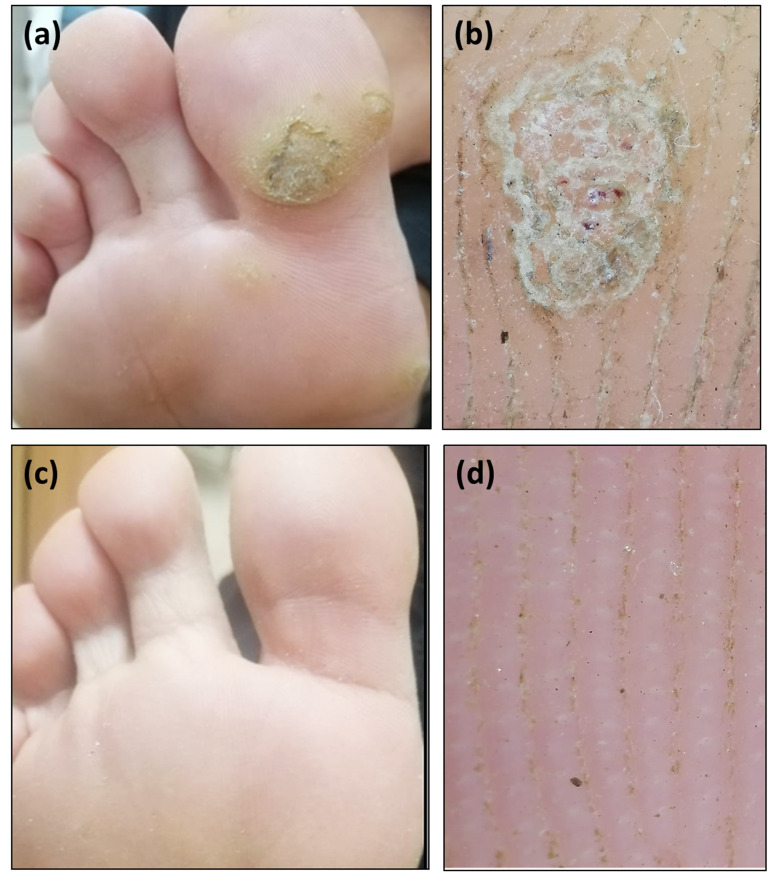
- Tiny black dots within the wart (clotted blood vessels, a hallmark)
- Pain when squeezed from the sides: but less when pressed straight down
- Feels like stepping on a pebble
- May be a single wart or a cluster (“mosaic warts”)
- Disrupts the normal skin lines (calluses don’t)
A callus and a plantar wart can look similar. The black dots and the side-squeeze test are the easiest way to tell them apart.
What causes it
Plantar warts are caused by the human papillomavirus (HPV): specifically strains that target tough, hairless skin. The virus enters through:
- Tiny cracks or cuts in the skin (often invisible)
- Walking barefoot on contaminated surfaces, pool decks, locker rooms, shared showers, hotel bathrooms
- Direct contact with someone else’s wart
You can also spread your own warts to other parts of your foot by scratching or picking.
Treatment options
About 2 in 3 plantar warts resolve on their own within 2 years: the immune system eventually catches up. But waiting it out isn’t always the right call, especially if the wart is painful or growing.
Try at home first
- Salicylic acid (40% patches or 17% liquid), apply daily for 8–12 weeks. Soak the foot first, then very gently exfoliate the surface with a pumice stone, apply, cover. The most evidence-based home treatment.
- Duct tape: covering the wart with duct tape between treatments may help (mixed evidence; safe to try)
- Don’t pick or cut: spreads the virus and risks infection
Don’t try home treatment if you have:
- Diabetes: salicylic acid can damage healthy skin and create a wound
- Peripheral neuropathy or any condition that reduces sensation in your feet: you can’t reliably tell when filing is causing damage
- Poor circulation or peripheral arterial disease: wounds are slow to heal
- A weakened immune system
See a podiatrist for in-office treatment instead.
When over-the-counter treatment isn’t enough: see a clinician
- Cryotherapy (liquid nitrogen), done in-office, usually 3–6 sessions every 2–4 weeks
- Stronger topical agents (cantharidin, prescription-strength salicylic acid)
- Immunotherapy (squaric acid, imiquimod), for stubborn or multiple warts
- Laser treatment: for resistant cases
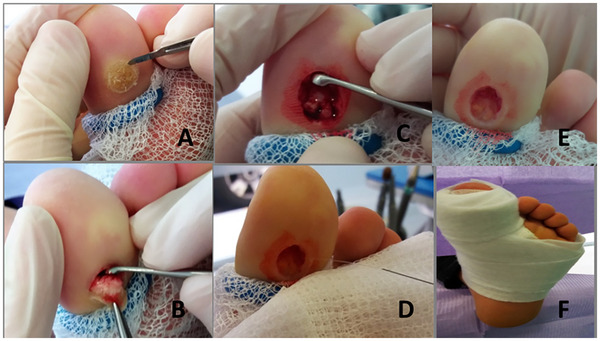
- Surgical removal: last resort due to scarring risk
When to see a clinician
Same-day evaluation for:
- A wart-like lesion that is bleeding, rapidly growing, or painful out of proportion to its appearance, these features can suggest verrucous carcinoma (a slow-growing form of squamous cell carcinoma that can be mistaken for a stubborn plantar wart for months or years) or other skin malignancy
- Any signs of infection, spreading redness, warmth, pus, fever, or red streaks running up the foot
- Any foot lesion in a person with diabetes, peripheral neuropathy, peripheral arterial disease, or a weakened immune system: even if it looks “just like a wart”
Standard appointment for:
- Confirming the diagnosis before starting any treatment
- Pain that limits walking or activity
- A wart that is growing or new lesions appearing
- No improvement after 2–3 months of home treatment
- Multiple warts or recurrent warts
Prevention
- Wear shower sandals in public locker rooms, pools, gyms, hotel bathrooms
- Don’t share towels, socks, or shoes
- Keep feet dry: change wet socks
- Don’t touch other people’s warts (or your own with bare hands)
- Cover existing warts with a bandage when going to the pool or gym to reduce spread
Sources
- Khattab F, Essam R, Elhadidy RF, Anis N. Intralesional combined digoxin and furosemide versus intralesional 5-fluorouracil for the treatment of recalcitrant plantar warts: a prospective, randomized study. Arch Dermatol Res. 2024. (CC BY 4.0) ↗
- Chiva Miralles MJ. Surgical Excision of Plantar Wart. Skin Res Technol. 2026. (CC BY 4.0) ↗
Last updated: May 1, 2026

About the author
Written and reviewed by a Doctor of Podiatric Medicine (DPM) practicing in Arizona for 6+ years. Board-certified by the American Board of Podiatric Medicine (ABPM); graduate of Midwestern University Arizona College of Podiatric Medicine.
Last clinically reviewed: May 1, 2026