Quick answer
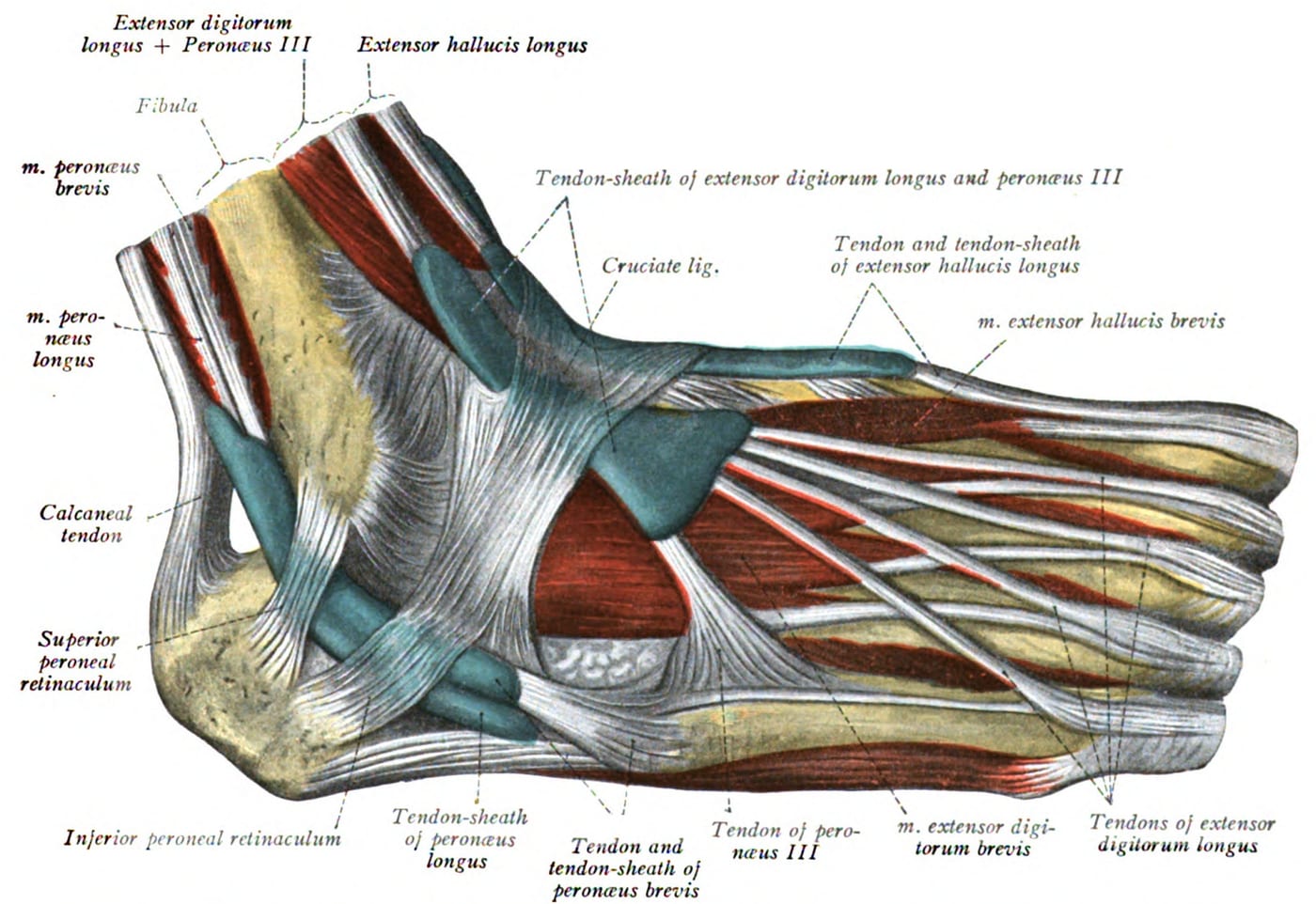
The extensor tendons run across the top (dorsum) of the foot and lift the foot and toes upward. The main ones are:
- Tibialis anterior: the largest, lifts the foot
- Extensor hallucis longus: lifts the big toe
- Extensor digitorum longus: lifts the lesser toes
- Peroneus tertius (when present)
Extensor tendinitis is inflammation of any of these, most commonly the tibialis anterior or extensor hallucis longus. It produces aching pain on top of the foot that’s worse with activity and pressure.
Why it happens
- Tight shoe lacing: by far the most common cause. The tendons get compressed against the metal eyelets and bone underneath
- Sudden increase in running, especially hill running and downhill running (eccentric loading on the extensors)
- Walking on uneven ground for extended periods (hiking, walking tours)
- High arch foot: concentrates dorsal forces on the tendons
- Bone spurs on the dorsum: can rub against the tendons (often coexists with midfoot arthritis)
- Sudden footwear changes: switching to a stiff or new shoe
The tendons themselves don’t usually have a structural problem; they’re irritated by external pressure or load.
How to recognize it
- Pain on top of the foot along the line of the tendons
- Tenderness when pressing along the tendon path
- Pain worse with active foot lift or toe extension against resistance
- Pain worse with shoes, especially tightly-laced shoes
- Sometimes a creaking or crepitus when the tendon is moved
- Mild swelling along the tendon
- Often relieved by removing shoes and resting the foot
A simple test: have the patient lift their foot upward against resistance. If the dorsal pain reproduces, extensor tendinitis is likely.
Diagnosis
Almost always a clinical diagnosis based on history and exam. Workup includes:
- History: recent activity changes, shoe history
- Exam: pain along the tendons, pain with resisted dorsiflexion or toe extension
- X-rays: to rule out a stress fracture or dorsal bone spurs (a common contributor)
- MRI or ultrasound: only if symptoms persist despite appropriate conservative care, or if the diagnosis is unclear
Treatment
The vast majority of cases resolve with simple measures:
First-line care
- Loosen shoe lacing: the single most effective step. Skip eyelets directly over the painful spot, or switch to a shoe with a different lacing pattern
- Rest from aggravating activity for 1–2 weeks
- Ice after activity
- NSAIDs for inflammation
- Padding under the laces: small foam or felt pads to redistribute pressure
- Switch shoes if a particular pair is the culprit
- Reduce running mileage temporarily, then build back gradually
For runners, a typical pattern: rest 5–7 days, then return to easy running while gradually rebuilding mileage. Avoid hills until pain-free.
If it doesn’t resolve
- Physical therapy: eccentric calf and shin strengthening; gait analysis
- Custom orthotics: if foot mechanics (high arch, overpronation) are contributing
- Cortisone injection: selectively, around (not into) the tendon. Generally reserved because of tendon rupture risk near injections
- Imaging to rule out other causes (stress fracture, dorsal bone spurs, ganglion cyst)
Surgery
Rarely needed. Reserved for:
- Cases with structural causes, bone spurs causing chronic friction, or specific tenosynovitis from a mass effect
- Surgical decompression involves removing the offending bone or tissue
Bottom line
Extensor tendinitis is one of the easiest foot problems to fix: most cases resolve with looser lacing, rest, and ice. Persistent cases warrant evaluation for underlying contributors (high arch, dorsal spurs, training errors). Surgery is rarely needed. If you’re a runner with new top-of-foot pain, check your laces and shoe wear pattern before anything else.
Last updated: April 28, 2026

About the author
Written and reviewed by a Doctor of Podiatric Medicine (DPM) practicing in Arizona for 6+ years. Board-certified by the American Board of Podiatric Medicine (ABPM); graduate of Midwestern University Arizona College of Podiatric Medicine.
Last clinically reviewed: April 28, 2026