Quick answer
Turf toe is a sprain of the joint at the base of the big toe (1st metatarsophalangeal joint, or 1st MTP). It’s named for the fact that it became common when football switched from grass to artificial turf, flexible-soled shoes on a hard, grippy surface let the big toe bend backward (hyperextend) more than normal. The injury can range from a mild sprain to a complete tear of the plantar plate: the strong ligament-like structure under the joint, that requires surgery.
Why it happens
The 1st MTP joint relies on a complex of structures called the plantar plate complex:
- Plantar plate: strong fibrocartilage running from the metatarsal head to the base of the big toe
- Sesamoid bones: two small bones embedded in the plantar plate that bear about half the load of the great toe during push-off
- Collateral ligaments on either side
- Capsule surrounding the joint
When the toe hyperextends (bends upward beyond normal), these structures stretch or tear from the metatarsal head. Severity ranges from microscopic stretching to complete tear with sesamoid retraction.
How it’s graded
| Grade | Injury | Recovery |
|---|---|---|
| Grade 1 | Stretch / mild sprain, minor pain, able to play | Days to 2 weeks |
| Grade 2 | Partial tear, moderate pain, limited push-off | 2–4 weeks |
| Grade 3 | Complete tear, significant pain, swelling, often bruising; can’t push off; sometimes sesamoid displacement | 6+ weeks; sometimes surgery |
How to recognize it
- Pain at the base of the big toe, especially on the plantar (bottom) side
- Swelling and bruising in more severe injuries
- Pain with push-off during running or jumping
- Limited range of motion of the big toe
- Tenderness when pressing on the bottom of the joint
- Inability to bend the big toe up (in severe cases), sign of plantar plate disruption
- A specific mechanism: forced upward bending of the big toe
Diagnosis
- History and exam: mechanism plus tenderness pattern
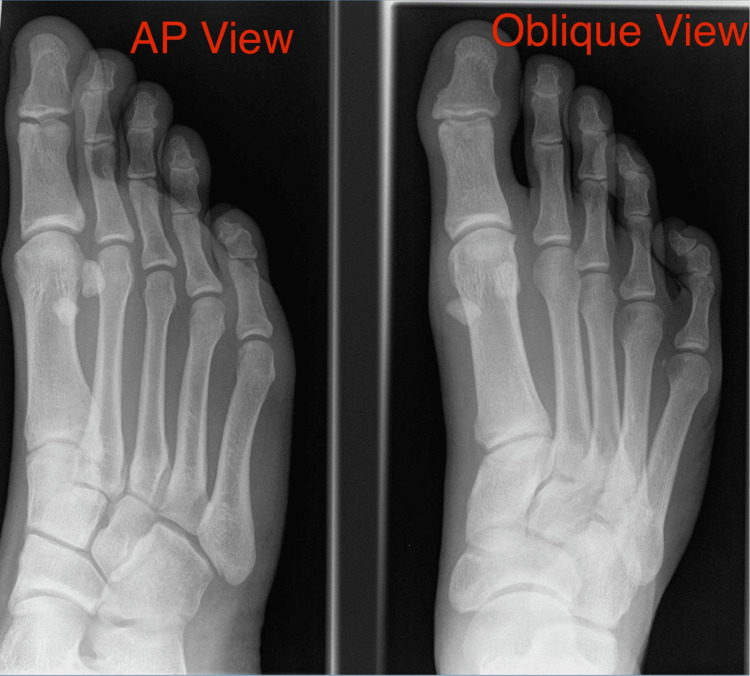
- X-rays: to rule out fracture, assess sesamoid position, and check for proximal sesamoid migration (a sign of severe injury)
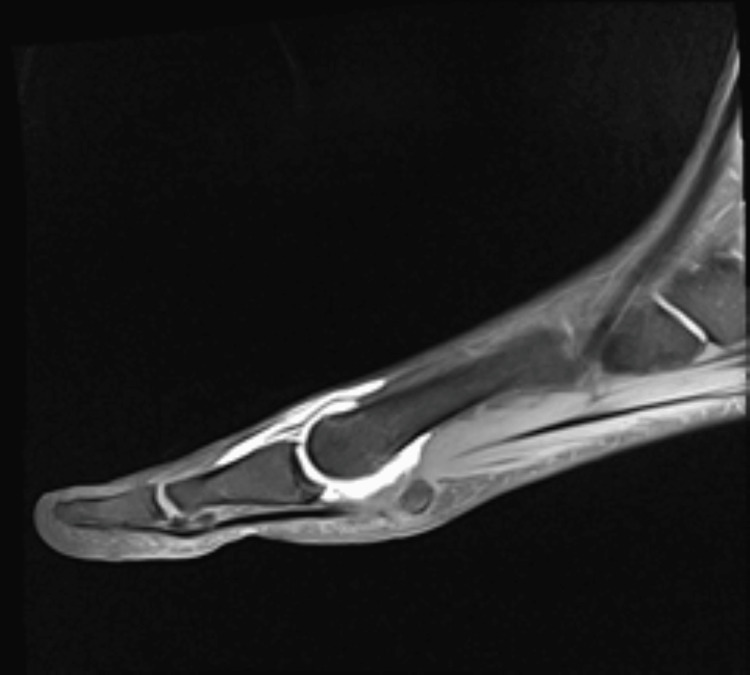
- MRI: gold standard for assessing plantar plate integrity, sesamoid bone health, and grading the injury
- Stress views or fluoroscopy: sometimes used in elite athletes to assess dynamic stability
Treatment
Grades 1–2 (most cases)
Non-operative management is the standard:
- Rest from sport: typically 1–4 weeks depending on severity
- Ice and NSAIDs for inflammation
- Stiff-soled shoe or rocker-bottom shoe: limits MTP motion and protects the joint
- Carbon fiber turf toe plate: a stiff insert that prevents the toe from bending
- Buddy taping of the big toe to limit extension
- Walking boot for severe Grade 2 cases for 1–2 weeks
- Physical therapy: gradual return to motion and push-off mechanics
- Return to sport when push-off is pain-free
Grade 3
- Walking boot for 4–8 weeks plus carbon fiber plate after
- Surgery is sometimes required, especially with:
- Diastasis (separation) of the sesamoids
- Proximal migration of the sesamoids
- Loose body in the joint
- Large osteochondral fragment
- Persistent instability
- Surgical repair reconstructs the plantar plate and stabilizes the sesamoids
- Return to sport typically 4–6 months post-operatively
Why proper recovery matters
Returning too early from turf toe is the most common cause of:
- Chronic stiffness and loss of push-off
- Hallux rigidus (early arthritis of the big toe joint), particularly if cartilage is damaged
- Recurrent injury with greater damage
- Sesamoid problems: fracture, AVN, or chronic pain
A Grade 3 turf toe in a competitive athlete can be career-changing. Stiff turf toe shoes/plates and a deliberate return-to-play protocol matter.
Bottom line
Turf toe is “just a sprain of the big toe” only at the mild end. Higher grades involve real disruption of the plantar plate and sesamoid complex and need formal management, sometimes surgery. Stiff-soled shoes and protective inserts are the cornerstone of treatment. Don’t treat a Grade 3 like a Grade 1, that’s how athletes lose seasons or develop early arthritis.
Sources
Last updated: July 16, 2026

About the author
Written and reviewed by a Doctor of Podiatric Medicine (DPM) practicing in Arizona for 6+ years. Board-certified by the American Board of Podiatric Medicine (ABPM); graduate of Midwestern University Arizona College of Podiatric Medicine.
Last clinically reviewed: July 16, 2026