What it is
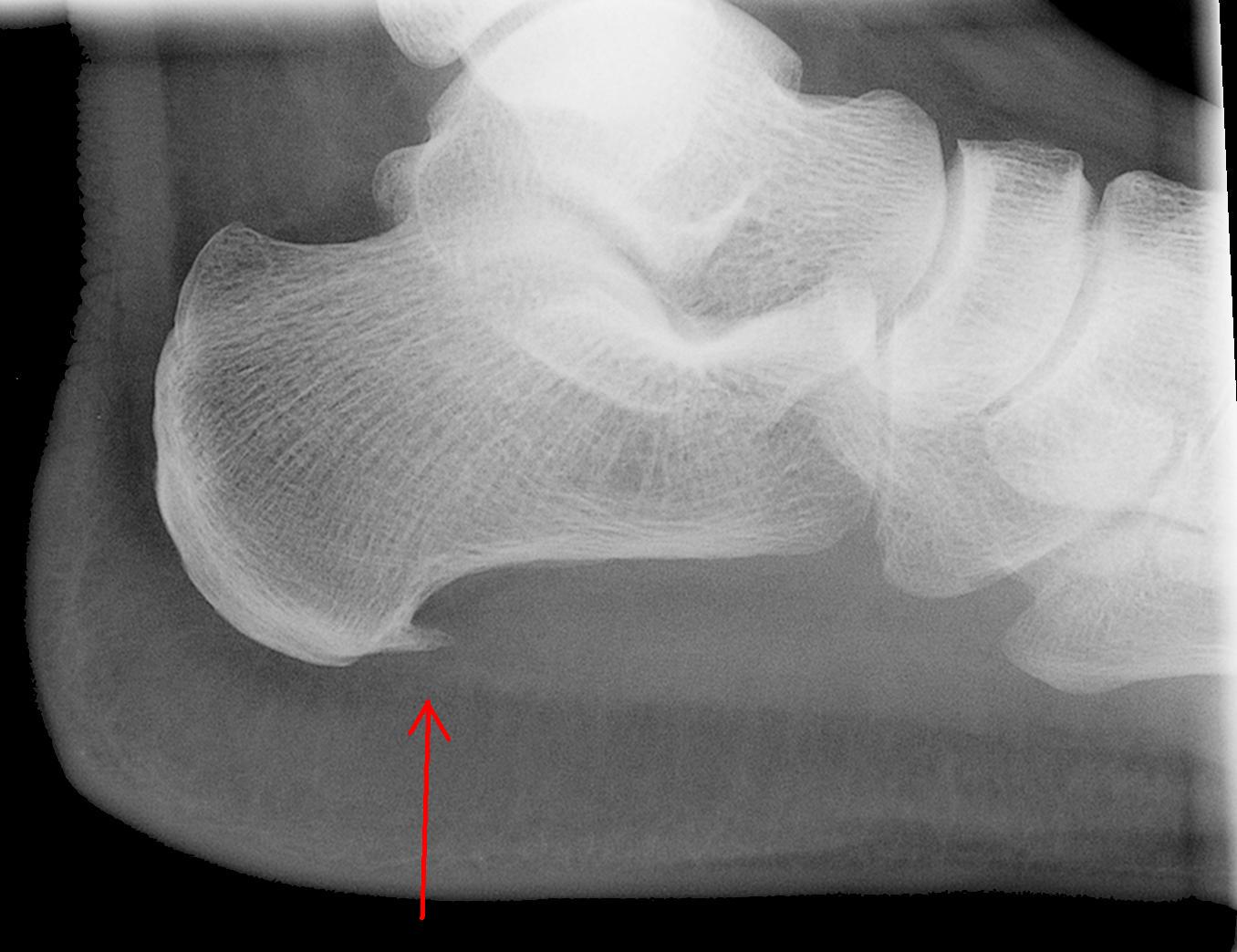
A heel spur is a calcium deposit that forms a small bony hook on the underside of the heel bone (calcaneus), usually at the spot where the plantar fascia attaches. They develop slowly, often over months or years, as the body’s response to repeated traction or stress on the heel.
The biggest misconception about heel spurs is that the spur itself causes pain. It doesn’t, in most cases. The pain comes from the surrounding soft tissue, particularly an inflamed or degenerating plantar fascia. Many people have heel spurs visible on X-ray with no symptoms whatsoever, and many people with disabling heel pain have no spur at all.
This is why “heel spur” and “plantar fasciitis” are often confused. They commonly coexist, and the spur is a marker of long-standing strain at the fascia’s heel attachment, but the spur isn’t the source of the pain.
Symptoms
Heel spurs themselves typically cause:
- Nothing. Most heel spurs are asymptomatic and discovered incidentally on X-ray taken for another reason.
When pain is present, it’s usually from the associated plantar fasciitis or heel pad inflammation:
- Sharp pain at the underside of the heel, especially with the first steps in the morning
- Pain that eases with a few minutes of walking, then returns with prolonged standing or activity
- Tenderness at the inside of the heel near the arch attachment
- Sometimes a deep, central heel ache from the heel fat pad
What causes them
Heel spurs form from chronic traction at the plantar fascia’s attachment to the calcaneus. The body responds to repetitive stress by laying down new bone. Contributors mirror those of plantar fasciitis:
- Chronic plantar fasciitis: the most common association
- Foot mechanics: flat feet (overpronation) or high arches both increase fascia strain
- Tight calves: limit ankle flexibility, transferring load to the fascia
- Older age: collagen quality declines, making degeneration more likely
- Long hours on hard surfaces: particularly in unsupportive shoes
- Higher body weight: more force with each step
- Inflammatory conditions: rheumatoid arthritis, ankylosing spondylitis, reactive arthritis can produce a different kind of spur (enthesophyte)
Treatment options
Because the spur itself rarely causes pain, treatment targets the underlying cause, usually plantar fasciitis. The treatment plan is essentially identical to plantar fasciitis treatment.
First-line management
- Stretching: calf stretches and plantar fascia stretches several times daily
- Supportive shoes with adequate arch support and a cushioned heel
- Heel cups or arch supports (over-the-counter)
- Activity modification: temporarily reduce running, switch to swimming or cycling
- Ice after activity, rolling a frozen water bottle under the arch
- NSAIDs for short-term pain relief
- Weight management if applicable
When initial measures aren’t enough
- Custom orthotics for specific foot mechanics
- Night splints to keep the fascia gently stretched
- Physical therapy with manual therapy and progressive loading
- Corticosteroid injection: used cautiously, as repeated injections can weaken the fascia
- Extracorporeal shock wave therapy (ESWT): non-invasive, evidence-supported for chronic cases
Surgery (rare)
Surgery is reserved for cases that fail 12+ months of dedicated conservative care. The procedures are typically aimed at the plantar fascia (partial release), not the spur itself, removing the spur alone often doesn’t resolve symptoms because the spur wasn’t the problem.
When to see a clinician
Get evaluated if:
- Heel pain persists more than 4–6 weeks despite stretching, supportive shoes, and activity modification
- Pain is severe enough to limit walking
- Symptoms are unusual, pain at night when off your feet, swelling, redness, fever (could suggest something other than mechanical heel pain)
- You have a history of inflammatory arthritis (the spur pattern can differ)
Prevention
Practical measures, especially if you’ve had heel pain before:
- Stretch daily: calf and plantar fascia stretches reduce traction on the heel
- Replace worn shoes: supportive shoes with cushioned heels
- Build mileage gradually if running or starting a new activity
- Avoid going barefoot on hard floors at home (slippers with arch support help)
- Maintain a healthy weight: every pound of body weight translates to several pounds of force at the heel during walking
Bottom line
A heel spur on X-ray is not, by itself, a reason to worry. If you have heel pain and a spur is found, the treatment is for the surrounding soft tissue, almost always plantar fasciitis. If you have a spur on X-ray and no pain, no treatment is needed.
Frequently asked questions
Are heel spurs and plantar fasciitis the same thing?
No, but they often go together. A heel spur is a bony growth on the heel bone, visible on X-ray. Plantar fasciitis is inflammation of the tissue that runs along the bottom of the foot. The pain almost always comes from the plantar fasciitis, not the spur itself. Many people without symptoms have heel spurs on X-ray; many with severe heel pain have no spur.
How do you get rid of a heel spur?
You usually don't need to. The pain comes from associated plantar fasciitis, not the spur. Treating the plantar fasciitis (stretching, supportive shoes, orthotics, ice, NSAIDs) resolves symptoms in over 90% of cases without removing the spur.
What does a heel spur feel like?
Heel spurs themselves usually cause no pain. When they do hurt, it's typically the same pattern as plantar fasciitis: stabbing pain at the bottom of the heel, worst with the first steps in the morning or after sitting, eases with walking but returns after long activity. The pain is from the inflamed tissue around the spur, not the spur itself.
Can heel spurs go away on their own?
The bony spur itself doesn't shrink, bone is permanent. But the pain from associated plantar fasciitis usually improves with treatment and time. Most patients become pain-free without the spur ever changing on X-ray. The goal is to resolve the soft-tissue inflammation, not eliminate the spur.
Do I need surgery for a heel spur?
Almost never. Over 90% of heel spur pain resolves with conservative treatment, stretching, supportive shoes, orthotics, night splints, and time. Surgery is considered only after 6–12 months of failed conservative care, and even then most surgeons focus on releasing the plantar fascia rather than removing the spur.
What shoes should I wear for heel spurs?
Look for cushioned heels, firm arch support, and a slight heel lift (not flat). Avoid going barefoot on hard floors at home, supportive sandals or house shoes help significantly. The same shoe choices that help plantar fasciitis help heel spur pain.
Sources
Last updated: July 16, 2026

About the author
Written and reviewed by a Doctor of Podiatric Medicine (DPM) practicing in Arizona for 6+ years. Board-certified by the American Board of Podiatric Medicine (ABPM); graduate of Midwestern University Arizona College of Podiatric Medicine.
Last clinically reviewed: July 16, 2026