Quick answer
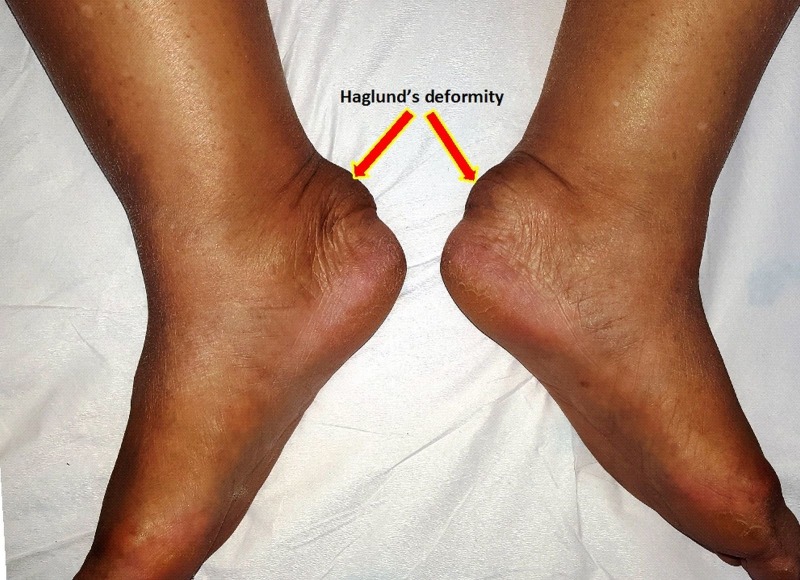
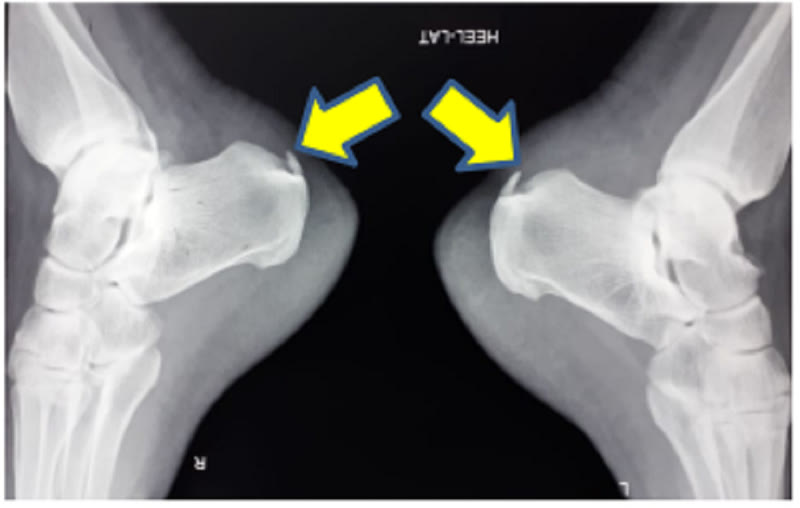
Haglund’s deformity is a bony prominence at the back of the heel bone (calcaneus). The bump itself doesn’t hurt, what hurts is the soft tissue around it: an inflamed bursa and sometimes the Achilles tendon attachment. The “pump bump” nickname comes from the classic association with stiff-backed pumps that rub on the prominence.
How to recognize it
- Visible bump at the back of the heel, sometimes red or thickened skin over it
- Pain at the back of the heel with stiff-backed shoes
- Tenderness when pressed at the bump
- Worse with high heels, dress shoes, ice skates, ski boots, cleats
- Better in soft-backed or open-backed shoes
- Sometimes coexists with insertional Achilles tendinitis: pain right where the Achilles attaches
What’s actually happening
Three things are typically going on:
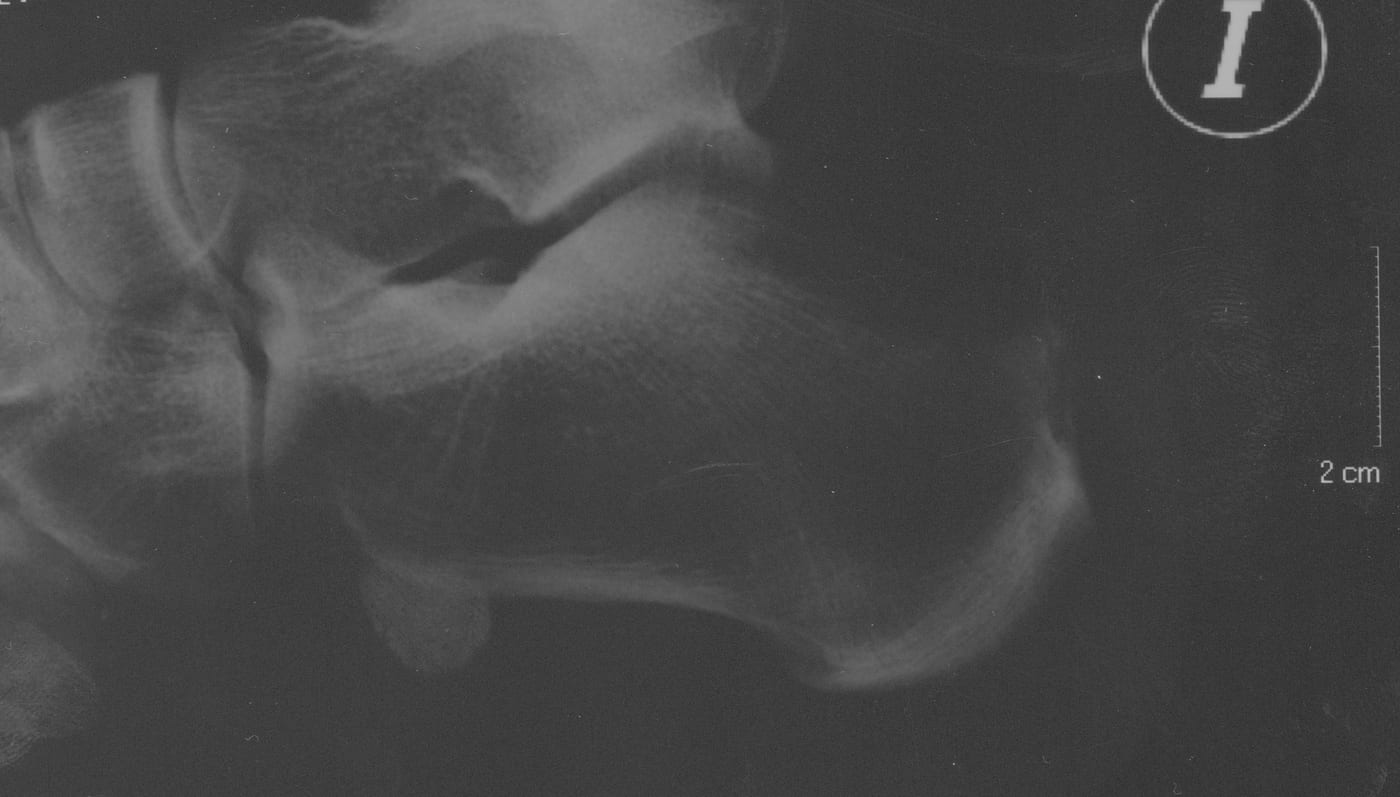
- The bony bump: a prominence at the upper-outer back of the heel bone. Often a normal anatomical variant some people are born with.
- Retrocalcaneal bursitis: inflammation of the bursa between the heel bone and the Achilles tendon
- Achilles tendinopathy: irritation where the tendon attaches to the heel
The combination is sometimes called the “Haglund’s syndrome.” Not everyone with the bony bump has pain, symptoms appear when shoe pressure or activity inflames the surrounding tissues.
Why it happens
- Stiff shoe heel counters: pumps, dress shoes, work boots, ice skates, ski boots, cleats all have rigid heel cups that press on the bump
- Repetitive impact: running, especially uphill or in worn shoes
- High arches (cavus foot): tend to angle the heel, putting more contact on the bump
- Tight Achilles / calf: increases tension at the heel attachment
- Inherited foot shape: the bony anatomy is largely genetic
What to do about it
Conservative care (resolves most cases)
- Change footwear: open-back shoes, soft-back shoes, mules, anything that doesn’t press on the bump
- Heel pads or lifts: raise the heel slightly so the bump sits above the shoe’s heel counter
- Soft padding over the bump (silicone gel sleeves)
- Stretching: calf and Achilles
- NSAIDs for short-term pain
- Ice after activity
- Reduce aggravating activities: running, hill walking
- Custom orthotics with a heel lift for high-arched feet
When initial measures aren’t enough
- Physical therapy: eccentric Achilles loading, calf strengthening
- Walking boot for 2–4 weeks for severe flares
- Steroid injection: used cautiously due to risk of Achilles tendon weakening; never injected directly into the tendon
- Extracorporeal shock wave therapy (ESWT): option for chronic cases
Surgery (last resort)
For cases that fail 6–12 months of conservative care:
- Bony resection (Haglund’s procedure): removing the prominence
- Achilles debridement if degenerative changes are present
- FHL tendon transfer for severe Achilles damage
Recovery is significant, typically 6–12 weeks in a boot, gradual return to activity, full recovery often 6+ months.
When to see a clinician
- Pain limiting your shoe choice or activities
- Visible skin breakdown over the bump
- Pain that’s worsened despite shoe changes
- Recurrent flare-ups
- Pain at the back of the heel that’s spreading or getting worse over time
- You have diabetes, closer attention to skin changes is important
Prevention
- Avoid stiff-backed shoes for prolonged daily wear
- Choose shoes with soft, padded heel counters
- Heel pads in shoes that put pressure on the bump
- Stretch calves daily
- Replace worn shoes
- Address tight calves with a stretching routine before they cause issues
Last updated: April 26, 2026

About the author
Written and reviewed by a Doctor of Podiatric Medicine (DPM) practicing in Arizona for 6+ years. Board-certified by the American Board of Podiatric Medicine (ABPM); graduate of Midwestern University Arizona College of Podiatric Medicine.
Last clinically reviewed: April 26, 2026