Quick verdict
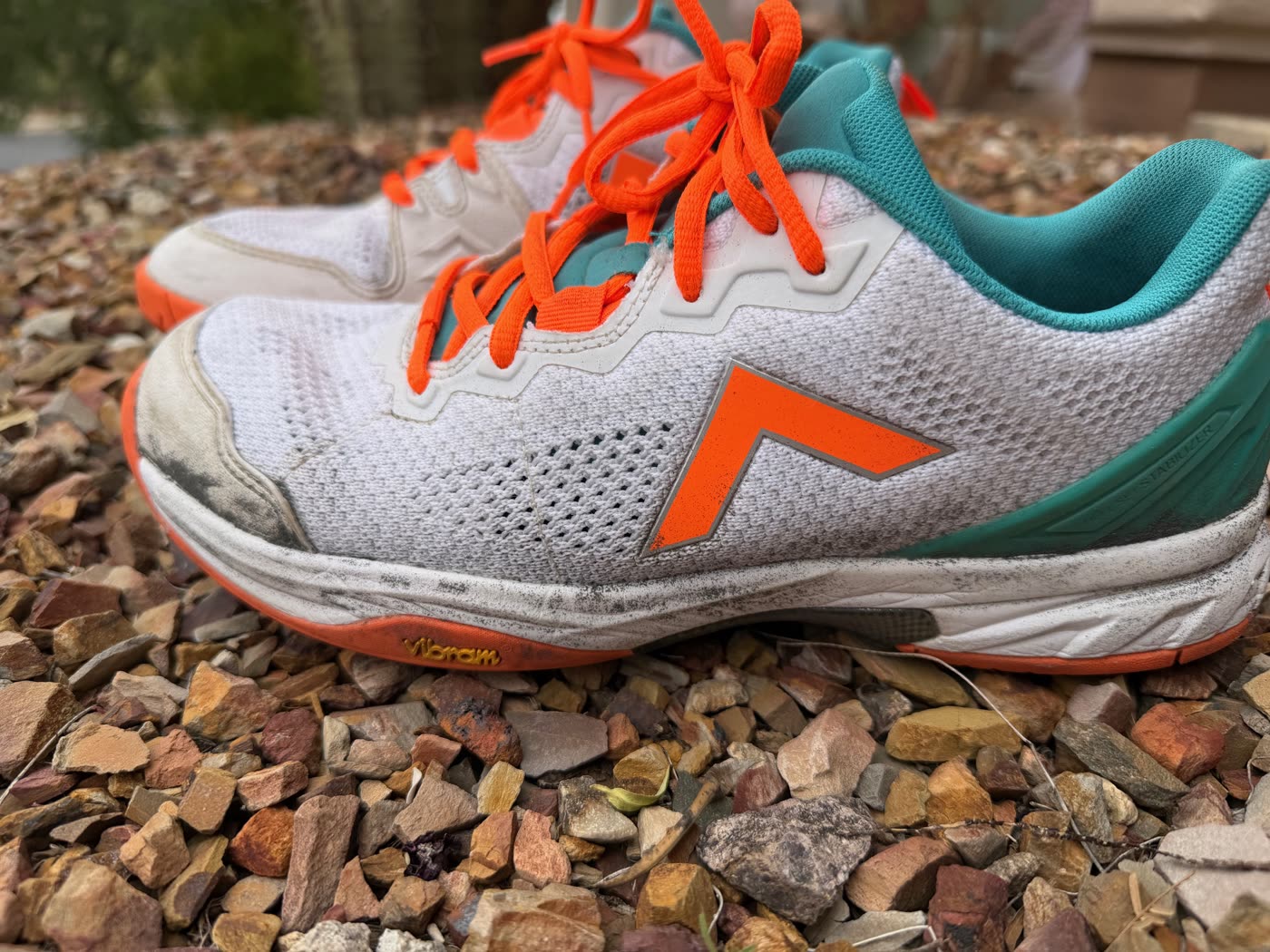
After nearly two years in the Tyrol Velocity V in white/aqua/orange (bought August 2024), playing weekly on both outdoor and indoor pickleball courts in Arizona. They’re not the lightest shoe on the court, but they’re one of the most stable, most durable, and most forgiving for players who need a roomier toe box. As a podiatrist who plays regularly, I’d take stability and durability over a couple of saved ounces in the shoe any day. The paddle is where I actually count ounces. For shoes, I’d rather have something my feet can trust through a long session.
Who I am, and how I tested
I’m a board-certified podiatrist in Arizona who’s been playing pickleball for five years, both outdoor (sport-court tile, painted concrete) and indoor at Ace Pickleball on its gritty indoor surface. Before the Velocity V I’d cycled through several court shoes. I bought the Velocity V at full retail. No samples, no payment, no relationship with Tyrol. See our review policy.
The first 10 minutes: first impressions
Out of the box: minimal break-in needed. The forefoot felt flexible and the heel collar locked on the first lace-up. True to size for me.
What I noticed first as a player
- Lateral stability is the standout. On hard cuts going to the kitchen, the shoe stays planted under me. The midsole sweeps up the lateral side and the heel counter is genuinely rigid. Squeeze the heel cup and try to fold the forefoot under, and there’s almost no give.
- The reinforced toe is the second standout. Pickleball is hard on the toe area. Quick stops drag the forefoot, especially on the lateral edge. Most court shoes wear through the mesh there in months. Look at the wear pattern photo below: after nearly two years of regular use, the toe bumper has scuffs but no holes.
- Heel-to-toe transition is smooth, not bouncy. Don’t expect plush. Expect controlled.
What I noticed as a podiatrist
A few things that don’t usually make it into shoe reviews but matter for foot health:
- The toe box is genuinely wide-anatomical, not just marketing wide. There’s room for the metatarsal heads to spread on push-off. That matters for anyone with a bunion, a Morton’s neuroma, or a tendency toward hammertoes.
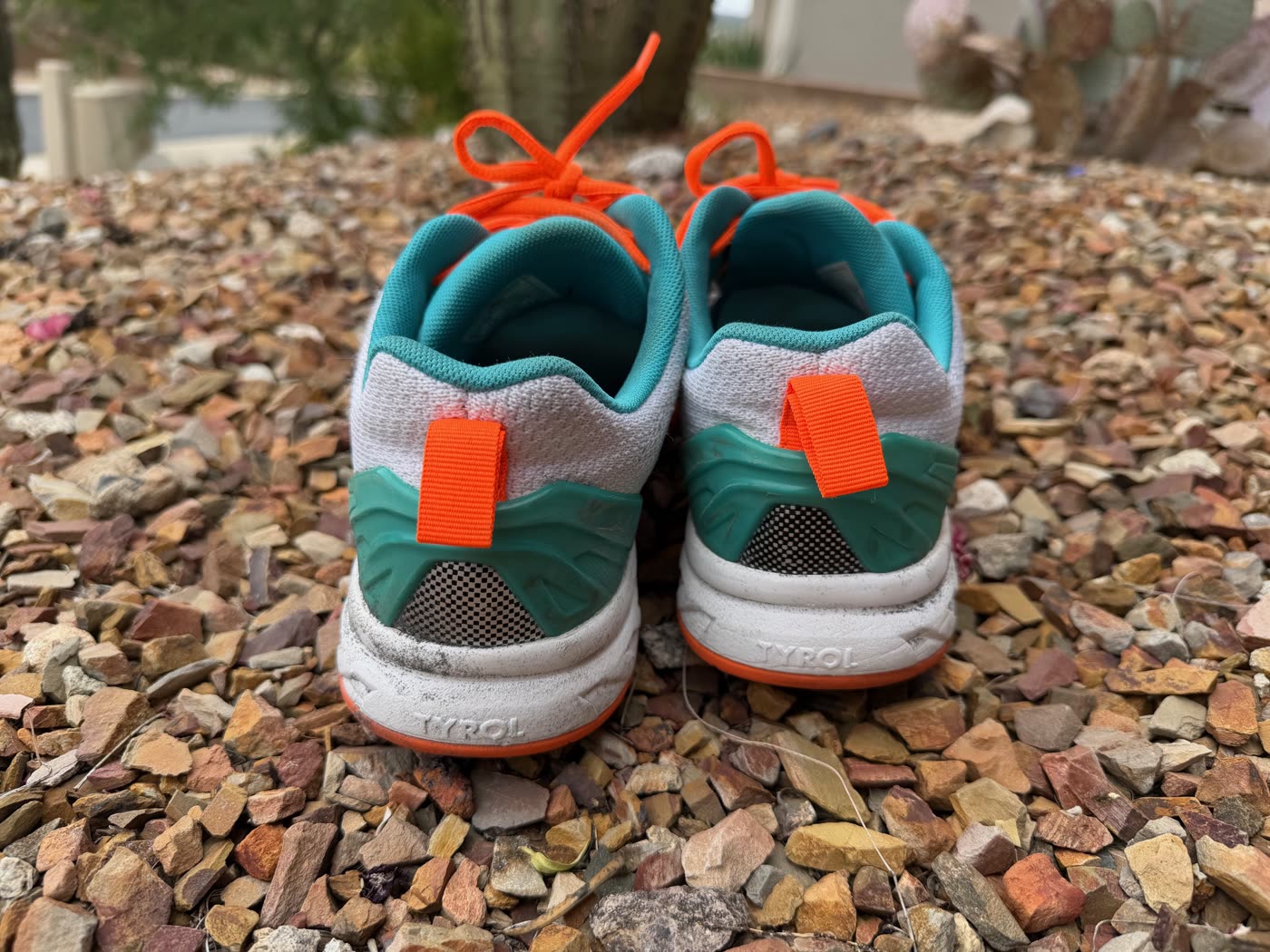
- The heel counter resists deformation. Pressed firmly between thumb and forefinger, it barely buckles. A firm heel counter is one of the most under-appreciated stability features for players prone to ankle sprains.
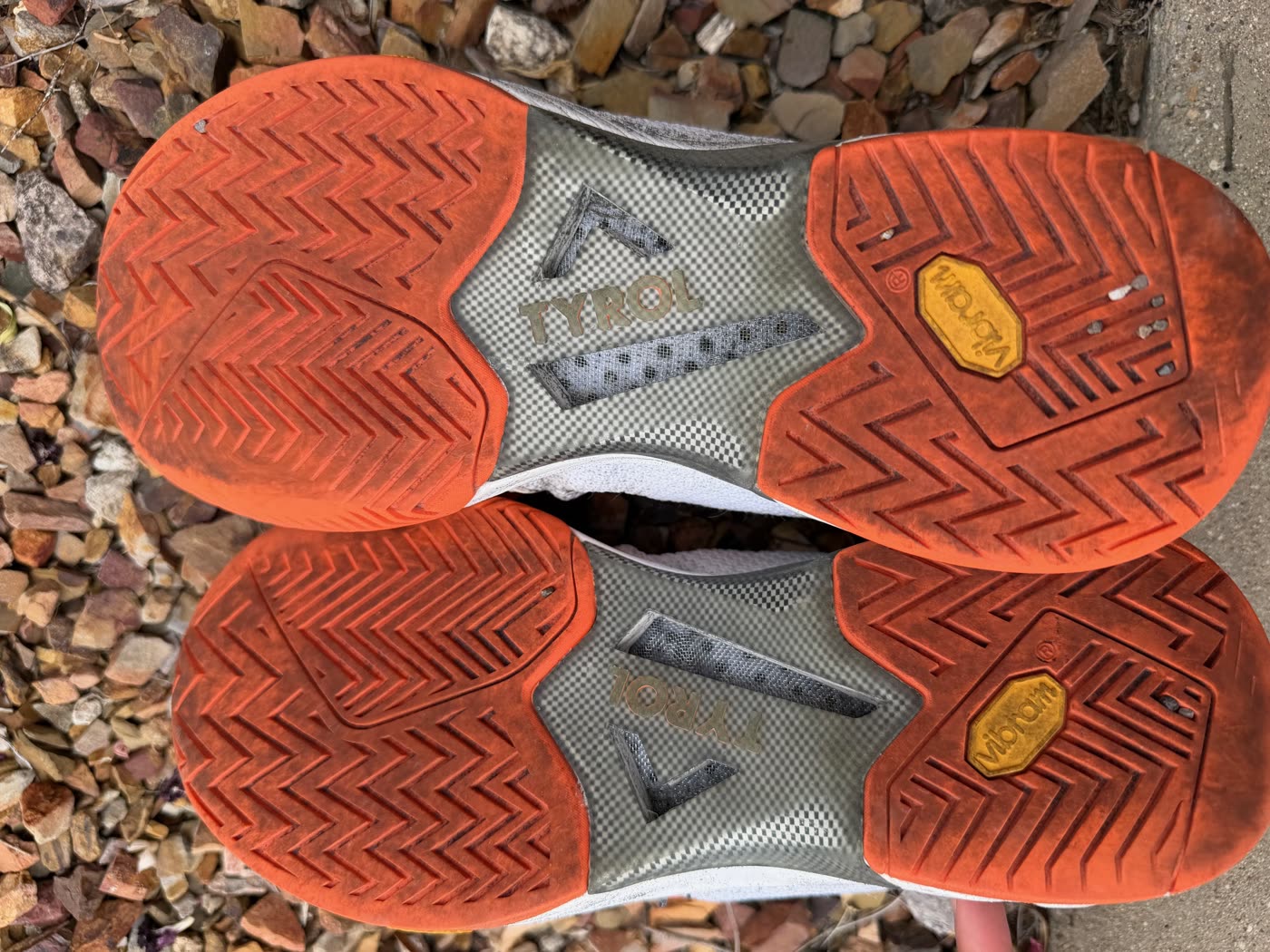
- The wear pattern on my pair (sole photo below) shows limited wear concentrated under the big toe push-off area, which is the expected propulsion pattern. The Vibram rubber held up better than I expected.
Stability and support
The lateral support comes from three things working together: the firm heel counter, the wraparound lateral midsole, and the structured upper around the midfoot. I haven’t rolled an ankle in this shoe in nearly two years of play. I have rolled them in lighter, softer pickleball shoes during the same period.
For players with chronic ankle instability or who’ve had previous sprains, the Velocity V is one I’d recommend trying.
Cushioning
The midsole is on the firm side of medium. It’s not a max-stack cushion shoe like a HOKA, and that’s intentional. A softer midsole gives more bounce but also more roll. The Velocity V trades some cushion for stability, and for a court sport that’s the right trade. If you have plantar fasciitis or metatarsalgia flare-ups and need more cushioning, you may want to add a supportive insert.
Outsole and grip: still strong after nearly two years
This is honestly the most impressive thing about these shoes after ~20 months. Look at the sole photo below. The Vibram herringbone tread is worn but still well-defined, not slick, not flat. On both outdoor sport tile and indoor courts, the grip still holds when I make a hard pivot. I expected to see significant slipping by now; I haven’t.
For a shoe in the price range to retain grip this well after nearly two years of regular play is unusual. It’s the single biggest reason I’d recommend Tyrol over cheaper court shoes that wear smooth in 4 to 6 months. The Vibram outsole works equally well on outdoor sport tile and on the gritty indoor courts I play at.
Durability
Look at the photos. That’s nearly two years of weekly play:
- Outsole: limited wear under the big toe push-off area after ~20 months, rest of tread pattern still defined and gripping
- Upper mesh: lightly soiled but intact, no holes
- Toe bumper: scuffed but structurally fine
- Heel counter: still firm, no breakdown
For comparison, my prior pickleball shoes wore through the mesh toe area in 4 to 6 months.
What I’d improve
- Weight. They’re noticeably heavier than ultralight options. After long sessions I feel it. Worth the trade for the stability, but worth flagging.
- Color options. White-based uppers show wear fast on outdoor courts (see photos). I’d love a darker colorway option for dustier conditions.
Bottom line
The Tyrol Velocity V is one of the most stable, most durable pickleball shoes I’ve played in. It’s not perfect (heavier than the lightest options, cushioning is firm), but for a player who values lateral support and a shoe that genuinely lasts, it’s an easy recommendation. As a podiatrist, the wide toe box, firm heel counter, and durable Vibram outsole are exactly what I’d build into a shoe if I were designing one for injury prevention in active players.
The grip after a year is what really sets these apart. That’s the kind of value that adds up over multiple seasons.
Pros
- + Genuinely rigid heel counter, the best lateral support I've tested in a pickleball shoe
- + Wide-anatomical toe box without sacrificing security
- + Reinforced toe bumper holds up against constant toe drag
- + Vibram outsole grip is still strong after nearly two years of regular play
- + Minimal break-in
Cons
- − Not the lightest shoe in the category
- − Firm cushioning may not suit players with chronic forefoot pain
- − White-based colors show wear quickly
Best for
- ✓ Players who roll ankles or have a history of lateral ankle sprains
- ✓ Players with bunions, neuromas, or wider feet
- ✓ Anyone who wants a court shoe that lasts more than one season
- ✓ Players who value stability over plushness
Skip if
- × You prioritize the lightest possible shoe
- × You need maximum cushioning for chronic forefoot pain
Last updated: May 3, 2026

About the author
Written and reviewed by a Doctor of Podiatric Medicine (DPM) practicing in Arizona for 6+ years. Board-certified by the American Board of Podiatric Medicine (ABPM); graduate of Midwestern University Arizona College of Podiatric Medicine.
Last clinically reviewed: May 3, 2026