Quick verdict
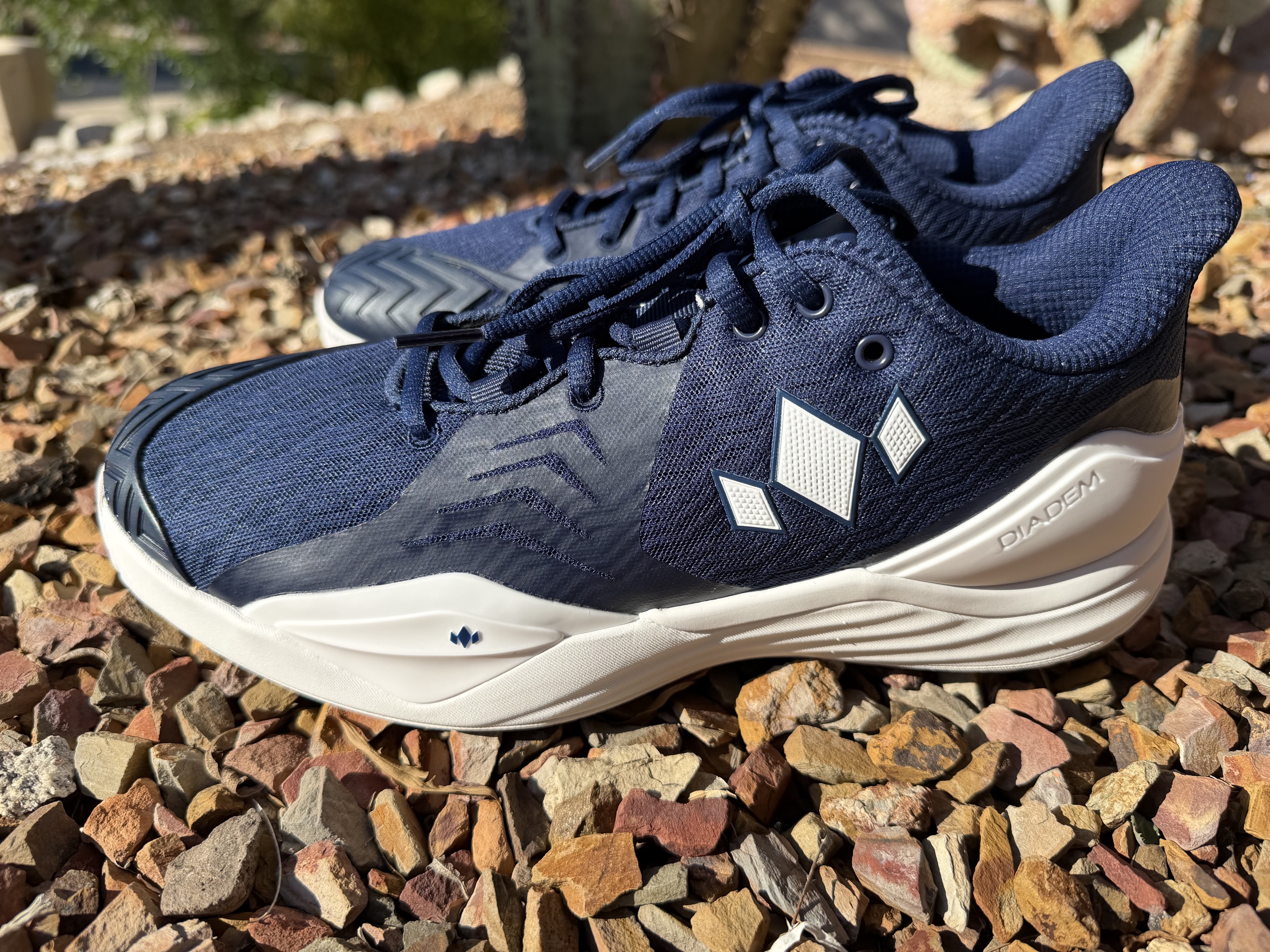
After a season of regular play, including a five-hour, roughly ten-match doubles tournament in the 4.5 division, the Diadem Court Burst in 2E wide delivers what I loved about the Nike Zoom Challenge plus the wide toebox the Nike never had. Tournament-level cuts, no ankle issues, no hot spots, and the durability question answered itself in the shoe’s favor. This review is now final: recommended. The full verdict is at the end of this page.
At a glance
| Tested | Court Burst, 2E wide, Navy/White |
| Disclosure | Provided by Diadem for independent review |
| Sport | Pickleball (also marketed for tennis) |
| Status | Final review. Recommended |
| Where I’m playing | Ace Pickleball Club, Arizona, indoor facility with outdoor-spec hard concrete-acrylic courts |
| MSRP | $149.95 |
| Weight | 13.1 oz (size 9) / 14.5 oz (size 9.5) |
| Heel-to-toe drop | 8 mm |
| Widths available | Standard + 2E wide |
| Stock insole | Removable cupped Ortholite, orthotic-friendly |
| Outsole | High-abrasion carbon rubber, full herringbone |
| Upper | 360 Performance Knit (4-way stretch, breathable) |
| Build type | Neutral, no medial post |
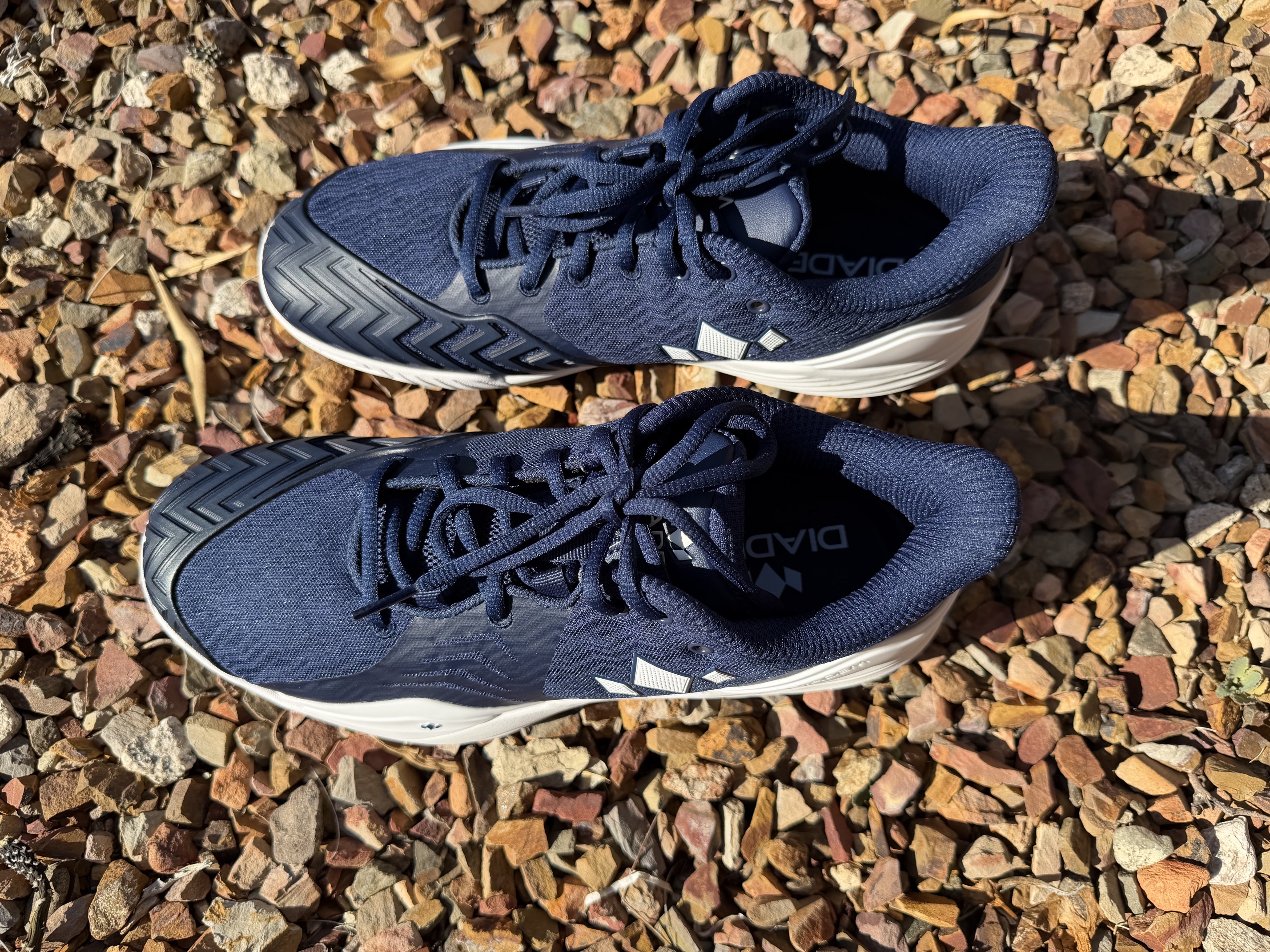 Top-down view: the 2E wide forefoot splays before tapering to the locked-in midfoot.
The sizing fear
My last three pickleball shoes, the NikeCourt Air Zoom Vapor Pro 2, the Nike Zoom Challenge, and a Skechers, all went back for a resize before I could play in them. So I was bracing for the same cycle with this one, especially in 2E wide. The Court Burst arrived, I laced it up, and it fit right out of the box. That alone was a relief.
What I’d been playing in
The shoe I loved most before this was the Nike Zoom Challenge. I wore them until the outsole tread was completely smooth. They got almost everything right: snug fit, dependable lateral stability, a forgiving toe cap, and grip I trusted on outdoor courts. The one persistent issue was width. The standard last wasn’t wide enough through the forefoot, so my pinky toe rubbed against the upper on both feet (eventually causing skin discoloration along the outer toe). I played through it because I loved everything else.
When the Zoom Challenges retired, I went to the Tyrol Velocity-V specifically for more toebox space. The Tyrol delivered the width, but traded it for a firmer toe cap (the Diadem feels more forgiving) and more weight underfoot that slowed me down on drop shots and direction changes.
So when the Court Burst arrived, the question was: can one shoe deliver the Zoom Challenge’s snug fit, grip, and forgiving toe cap and the Tyrol’s roomier forefoot?
First session
My first session was at Ace Pickleball Club in Arizona, an indoor facility built with outdoor-spec hard concrete and acrylic courts. Arizona summer heat makes traditional outdoor play impractical right now, so this climate-controlled outdoor surface is my regular environment. The grip profile and surface friction match an outdoor court, just without the wind, sun, and heat to confound things. When I say “outdoor” anywhere in this review, that is what I mean.
- Snug, locked-in midfoot and rearfoot. No sliding on lateral cuts, no pre-rolled-ankle feeling on hard side-to-side changes of direction. My foot felt secure inside the shoe.
- Supported all around. Internal heel cup, external heel counter wrapping the rearfoot, and the Rebound X lateral TPU overlays work together to lock the foot in from multiple angles. The arch felt right under my foot from the first lace-up too.
- Roomy toebox without sloppiness. The 2E width lets the forefoot splay during push-offs, but the midfoot lockdown keeps the foot from shifting around. Three hours, no pinky-toe rub, no hot spots.
- Outsole grip was solid. No slip on lateral pushes, confidence getting low on drops and dinks.
- Lighter than the Tyrol. Noticeably faster underfoot, easier to reach a slice or change direction late in a rally.
- Soft, forgiving toe cap. Closer to the Zoom Challenge feel than the Tyrol’s firmer cap. The Diadem felt more forgiving on dig stops, with no toe jamming at three hours.
What I noticed as a podiatrist, click to expand the structural breakdown
- Rebound X lateral overlays. The dark zigzag TPU on the lateral side is Diadem’s roll-guard system. Combined with the internal heel cup and external heel counter, it’s what locks the midfoot down during cuts.
- Pro Stance X shank. An internal midsole stiffener Diadem lists for torsional support. In practice the midsole flexes easily by hand, so the locked-in feel is mostly coming from the heel cup, heel counter, and Rebound X, not the shank.
- Pivot point under the first MTP joint. The smoother patch on the outsole lets the foot rotate during pivots without grabbing, protective for anyone with hallux rigidus or limitus.
- Max Shield toe wrap. The thick TPU at the medial toe is built for back-foot drags, tennis heritage, but it works for pickleball lunges and dinks.
- Gusseted tongue. Partially sewn into the upper. Keeps debris out on outdoor courts.
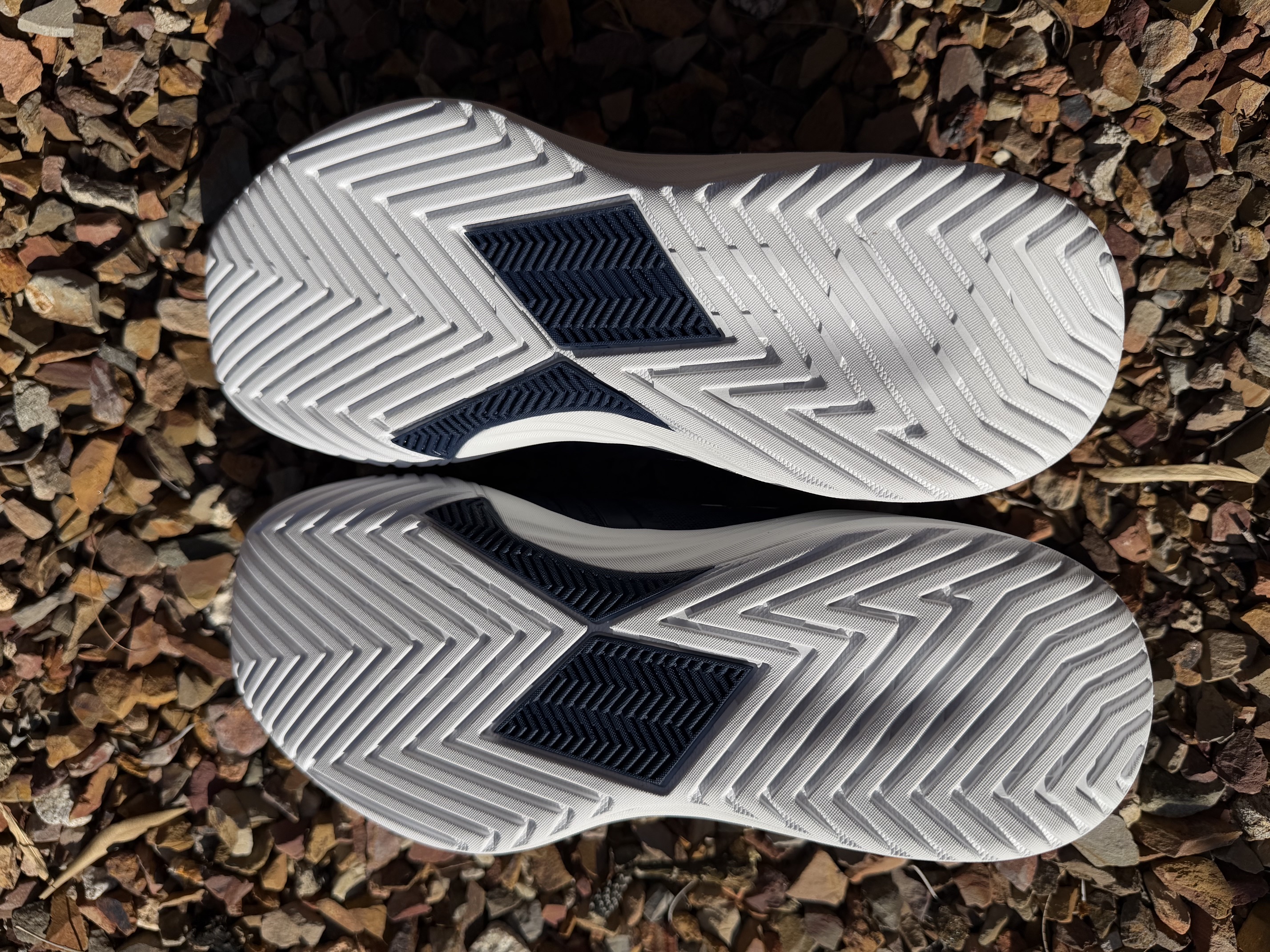 Outsole: full herringbone coverage; the dark diamond patch at the medial forefoot is the pivot point under the first MTP joint.
- Neutral build, no medial post. The midsole walls cradle the foot rather than forcing a correction. The removable cupped Ortholite insole means a custom orthotic drops in cleanly. My clinical preference for severe overpronation or supination is a neutral shoe + custom orthotic over a built-in stability shoe, the orthotic corrects to your foot, not a generic shape.
- Soft outsole compound. Explains the strong first-session grip. Also why durability is still the open question, softer rubber wears faster.
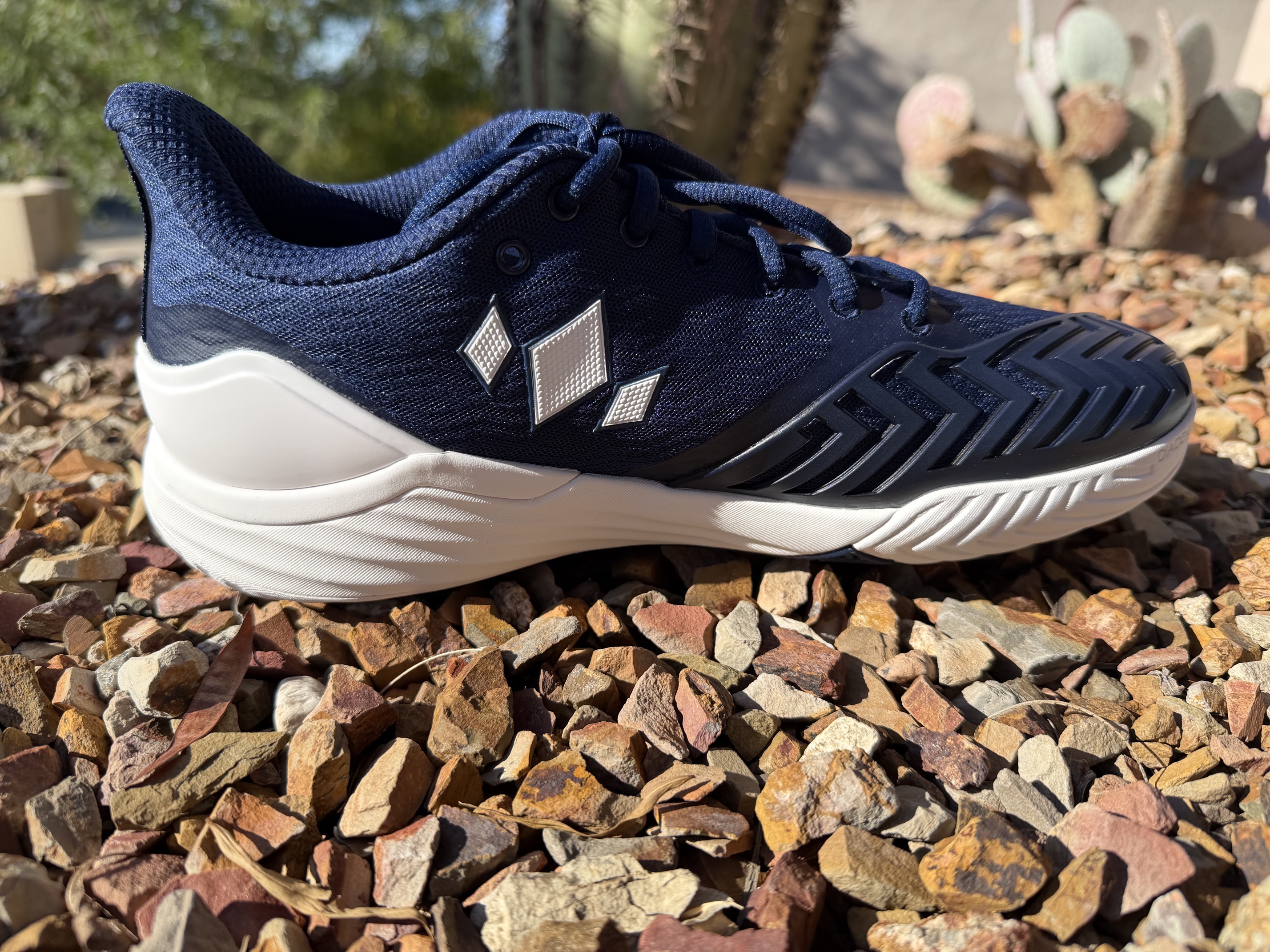 Medial side: the dark TPU wrapping the toe is Max Shield. The medial overlays here are lighter than the lateral Rebound X, and there’s no medial post, confirming the neutral build.
Closest comparison I can draw
The honest answer: it’s the Nike Zoom Challenge with the sizing finally fixed. The Court Burst delivers everything I loved about the Zoom Challenge, snug fit, lateral stability, outdoor grip, forgiving toe cap, and adds the wide toebox the Nike never had. A wide toebox isn’t a luxury on a court shoe; it’s a baseline for anyone whose forefoot isn’t narrow. The Tyrol Velocity-V got this right too, but the Court Burst matches the Tyrol on width while feeling lighter and more forgiving in the toe cap.
One specific design detail worth calling out: separate from the overall feel (which is closer to the Zoom Challenge), the Court Burst’s toe cap placement is closer to the NikeCourt Air Zoom Vapor Pro 2 than to the Tyrol. The reinforcement is concentrated where the big toe lives, rather than spread as a wraparound rand across the whole forefoot. That is the right call anatomically. The first toe is where you actually need toe-cap protection during dig stops and lunges.
I am retiring the Tyrol now, so the Court Burst is also the shoe taking over my regular play rotation.
The tournament: a real load test
The first real load test on these came at a men’s doubles tournament at Ace Pickleball Club, 4.5 division, roughly ten matches across five hours, same outdoor-spec hard court surface I’d been training on. I had signed up for 4.0; they didn’t have enough 4.0 players, so I was bumped up to 4.5, which meant faster pace, more aggressive lateral cuts, and more time on my feet than I’d planned for. Bronze medal team finish.
The summary version: the shoe did not give me anything to complain about across the full tournament. Specifically:
- Lateral stability held up through 4.5-level cuts. No pre-rolled-ankle moments, no slipping out of the shoe on sudden direction changes. With my history of ankle sprain risk, this is the data point that mattered most to me, and the shoe delivered.
- Width still good under tournament load. No pinky-toe rub, no hot spots, no blisters across ten matches. The 2E toebox kept enough room for the foot to splay during long points without going sloppy in the midfoot.
- Support didn’t loosen. The locked-in feel from earlier sessions carried into the tournament. The Rebound X overlays, internal heel cup, and external heel counter were still doing their job by the last match.
- Grip still confident on Ace’s hard outdoor-spec surface. No slip on hard pushes, even when I was tired and not picking my feet up cleanly.
- Nothing wore down enough to flag. No cushioning bottom-out, no upper deformation, no obvious tread loss across the tournament. Outsole durability is still the long-term open question, I’d want 20 to 30 hours total before I can speak to that, but I’m not seeing concerning wear yet.
The honest take: the shoe behaved the same in a tournament as it did in casual play. Which is what you want from a court shoe.
Durability update (June 2026)
Several more weeks of regular play and tournament use later, the durability question I flagged is answering itself in the shoe’s favor. The outsole tread, the cushioning, and the upper all still feel essentially as good as new: no grip fade, no cushioning bottom-out, no upper breakdown. The specific failure mode I was watching for, the way my old Nike Zoom Challenges eventually lost their grip and had to be retired, has not shown up here. At this point these are genuinely among the best court shoes I’ve used.
The trajectory was clear then, and it held: durability stopped being an open question.
What I logged before calling it
- Outsole durability. Held. A season of hours in, the tread still grips like the first week.
- Heat and sweat over time. The upper kept its shape and breathability through repeated Arizona play cycles.
- Cushioning settle-in. Stayed supportive with no bottoming out through the 20-to-30-hour window where most court shoes declare themselves.
Final verdict (July 2026)
This is the final update, and it is a short one: after a full season of regular play, a 4.5 doubles tournament, and every durability checkpoint I set at the start, I have nothing negative to say about this shoe. They are truly exceptional. Same locked-in midfoot as day one, same forgiving toe cap, same grip on hard courts, same 2E width that lets the forefoot splay without the midfoot going sloppy, and durability that closed its own question. I went in skeptical after three straight shoes that needed resizing; these went from promising first impressions to my regular play and tournament shoe without a single complaint along the way. Recommended, full stop.
Pros
- + Perfect weight underfoot, light enough to be faster on drop shots and direction changes
- + Zero break-in, felt worn-in from the first lace-up
- + Gold-standard outdoor grip from full-coverage herringbone tread
- + Toe cap placed right, protection concentrated over the big toe, not a hard wraparound rand
- + Genuine 2E wide option, should be industry standard for court shoes
- + Breathable mesh upper held up across a five-hour tournament with no hot spots
- + Snug midfoot lockdown via Rebound X lateral roll guard + internal heel cup + external heel counter
- + Removable cupped Ortholite insole, clean drop-in for custom orthotics
Cons
- − Neutral build with no medial post, players who need built-in motion control should plan to pair this with a custom orthotic
Best for
- ✓ Wide-foot players in 2E
- ✓ Outdoor or hard-court pickleball
- ✓ Players who prioritize lateral stability and ankle-roll prevention
Skip if
- × You need built-in motion control (without using a custom orthotic)
Last updated: July 11, 2026

About the author
Written and reviewed by a Doctor of Podiatric Medicine (DPM) practicing in Arizona for 6+ years. Board-certified by the American Board of Podiatric Medicine (ABPM); graduate of Midwestern University Arizona College of Podiatric Medicine.
Last clinically reviewed: July 11, 2026