
Should I Drain a Black Toenail at Home?
A podiatrist's honest answer to the black-toenail question: why home drainage is not the right move, what an in-office visit actually looks like, and the rare warning sign that is not a bruise at all.
September 30, 2026
Short answer: no. The heated-needle trick is all over the internet, and yes it can be done. I still tell patients not to. Here is why, and what a professional actually does instead.
What is actually going on
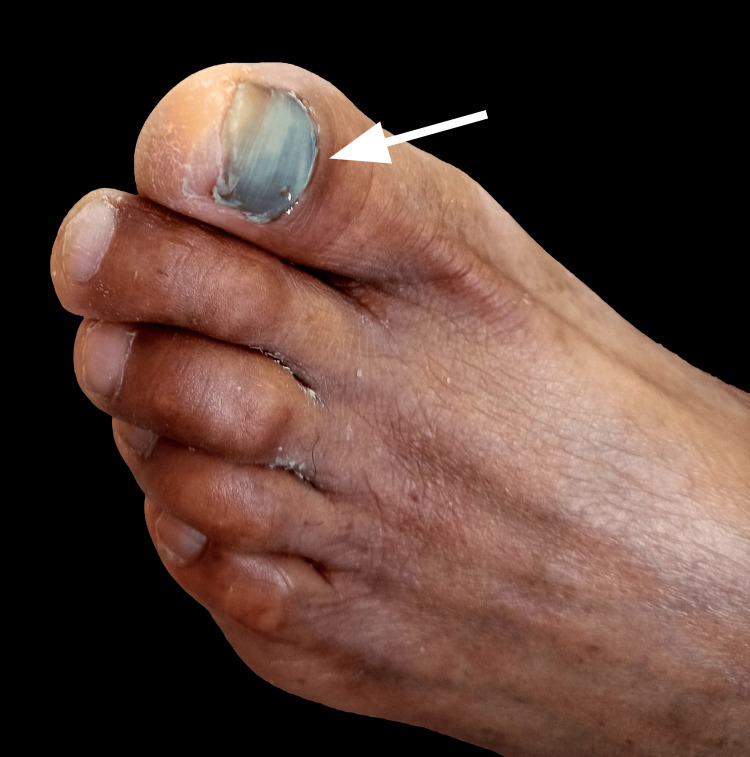
A black toenail (subungual hematoma) is blood trapped between the nail plate and the nail bed. The nail plate is rigid, so the blood pools and the pressure has nowhere to go. That is the throbbing you feel a few hours after stubbing the toe hard or coming off a long downhill run.
Drainage only helps in a narrow window
Draining relieves pressure only during the first day or two, while the blood is still liquid. After about 48 hours the blood clots, and no amount of poking helps. So if your injury is a few days old already, the throbbing is not going away with any technique at all. It has to grow out.
Within that first-48-hour window, drainage does work. The real question is who should be doing it.
Why I recommend against doing it yourself
The technique on paper is simple: sterilize a needle in a flame, press it against the nail until it melts through. What that description leaves out is the part that matters. You cannot examine your own toe well enough to know whether the nail bed underneath is torn or a bone is broken, and either of those changes the plan. A hematoma covering more than about a quarter of the nail often signals exactly that kind of injury. A podiatrist looks first, sometimes orders an X-ray, and then decides whether drainage is even the right move.
The rest is risk math. A puncture through the nail is still a wound, so infection risk is low but not zero. Meanwhile the in-office version takes under a minute, does not usually need anesthesia (the nail plate has no nerve endings), and can happen the same day. Weighing a one-minute clinic visit against a bathroom-sink puncture, the office wins almost every time.
I tell patients: leave it to a professional.
What happens in the office
A heated needle or a spring-loaded trephinator melts a small hole through the nail plate. The blood drains, the pressure lifts, and the pain drops in seconds.
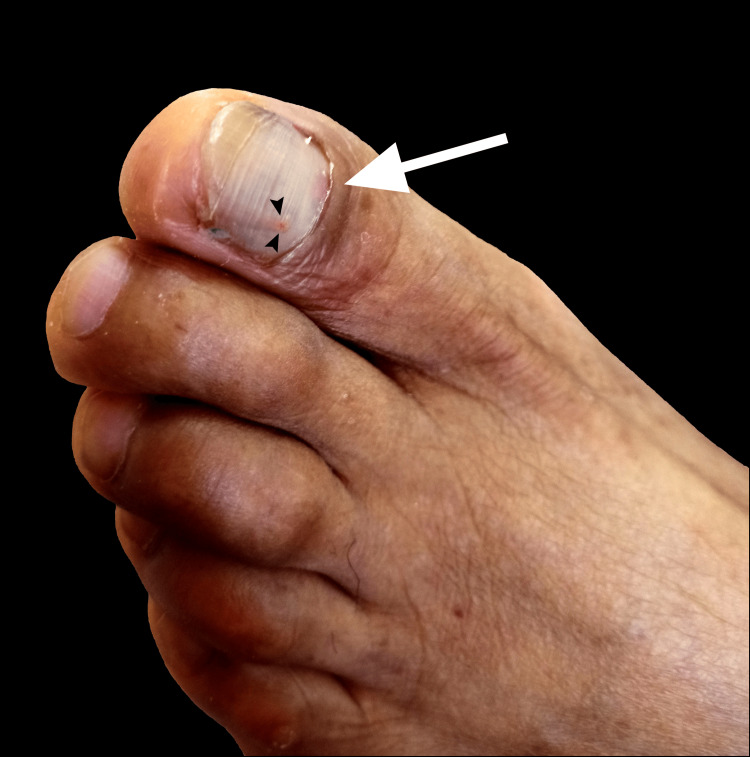
If a broken toe or a torn nail bed is suspected, an X-ray comes first and the nail may need to come off so the bed underneath can be cleaned and repaired.
The one dark spot that is not a bruise
A hematoma has a story: you stubbed it, dropped something on it, ran a marathon in tight shoes. A pigmented streak that shows up without any injury at all is a different animal. So is one that spreads into the skin around the nail (Hutchinson’s sign), or one that grows and darkens over time. That short list is one of the few things worth taking seriously under a toenail. Subungual melanoma is rare, but it exists, and it is why “a bruise that will not grow out” gets a second look.
The one absolute
If you have diabetes, neuropathy, or poor circulation, do not attempt any home drainage under any circumstances. A puncture through the nail plate is a wound, and a wound you cannot fully feel or heal is exactly how serious foot infections start in this group. Same-week evaluation is the rule, and same-day if there is any drainage, redness, or warmth.
The full picture, including how the two patterns of injury (single-event vs runner’s toe) differ and what recovery looks like, is on our subungual hematoma guide.
Frequently asked questions
Can I drain a black toenail with a heated needle at home?
Technically yes. The heated-needle technique is in medical literature and described all over the internet. As a podiatrist my recommendation is still no. You cannot examine your own toe for a fracture or a torn nail bed. A puncture through the nail plate is still a wound. And the in-office version is fast, does not usually require anesthesia, and can almost always happen same-day. If you have diabetes, neuropathy, or poor circulation, do not attempt this under any circumstances.
How long does a black toenail take to grow out?
A toenail grows out fully in about 9 to 12 months. Whatever is stained by the trapped blood will not turn clear again; the dark patch just marches forward with the nail until you can trim it off. Occasionally the whole nail lifts and falls off before it fully grows in. That is not an emergency, it is the nail bed rebooting, and a new nail usually grows in normally underneath.
When is a dark spot under the toenail not a bruise?
A pigmented streak that appeared without any injury, that extends into the skin around the nail (called Hutchinson's sign), or that grows or darkens over time deserves urgent evaluation. Melanoma under a nail (subungual melanoma) is rare but it exists, and it is one of the few genuinely dangerous things that can hide behind a bruise-that-is-not-a-bruise. If you cannot remember stubbing or losing a toenail, and the dark area is growing, see a podiatrist or dermatologist this month.
Related guides
Sources
This is general educational information from a licensed podiatrist, not a diagnosis or a treatment plan. If a problem is painful, worsening, or just not improving, see a clinician who can examine you.